Showing posts with label books. Show all posts

Thursday, January 25, 2018

And yet, she persisted

The eldest niecester is now in the double digits, officially a tween.

I've read all manner of horrible studies that show this is when the gender gap can start in school: girls start to take less of an interest in STEM, sports, etc. She already claims she doesn't like math, despite being good at it; and she already refused to join a new soccer team when they moved out of loyalty to her old team but also because she says she doesn't like running anymore.

Yet La Primera Sobrina has all the makings of a future activist to make her parents and tía proud. (Aside from being vocally enthusiastic about the possibility of a female president during the '16 campaign, when the family decided to watch the Star Wars movies, she demanded that they watch Rogue One first because it had a girl as the protagonist.)

So aside from getting her Hidden Figures on Blu-Ray for her birthday, La Mas Cool Tia Del Mundo went on a bender to get ideas for girl-power, age-appropriate books for her. I looked to A Mighty Girl for my inspiration; most of the time their suggestions are excellent, but sometimes they aren't.

I got Sylvia and Aki without actually reading the description; I assumed it was a book about friendship between two girls during WW2 and that the focus was that one of them was Japanese-American and incarcerated. OOPS! Turns out, yes, that's a tiny part of the story, which is based on a real-life friendship between two girls in the '40s, but also more importantly, the real-life Mendez v Westminster case out of California. Mendez was a father's (eventually successful) attempt to desegregate California schools so that his kids didn't have to walk a longer distance to go to the Mexican-only school; it was later cited in Brown v Board of Education that achieved the same goal of integration, this time nationwide.  I was unintentionally trying to highlight her Asian American heritage but accidentally ended up showcasing how important her Mexican American heritage is. TOTALLY amazing book for La Sobrina, given that she is one (and "only" half) of the Latino kids at their Michigan elementary school.

Next up was Women Explorers. I, for one, was inspired by the true tales of women who travelled alone, went mountain-climbing when society told them they shouldn't, and took off to be adventurous.  HOWEVER, every single woman highlighted was either European or white American (even the Mexican heroine), and most of them were also upper-middle class if not outright wealthy. Sacajawea didn't even make a token appearance. I nixed it for La Sobrina on that basis alone. It was inspiring, yes, but didn't deviate from the pre-Third Wave feminist mentality that women's history is by default white women's history.

I also nixed The King's Equal for being too stuck in the tired Poor Girl Changes Royalty theme.I normally approve of Katherine Paterson, but this book was really disappointing. Basically, there's a conceited prince and a beautiful, intelligent but poor villager. They swap places for a year when he becomes king; it changes him, and his obviously future queen did a great job running the kingdom, so they get married. Blah.


Because the kids loved Newsies, I thought We Were There Too might keep the spark of children's activism alive. I, for one, enjoyed it. But I think it is a little dense reading for kids. And most of the "children" whose stories are told throughout American history are actually teenagers, which I thought La Sobrina and her younger siblings maybe wouldn't find as relatable. Where Women Explorers failed, however, We Were There Too had stories from a wide range of racial and ethnic backgrounds as well as socioeconomic classes. It highlighted everything from strikes to helping their families during war, and wasn't intended to be about activism so much as just showing that kids were part of American history too. The only problematic piece was that the first third of the book (early United States history) relied on European settlers' accounts, so the stories are obviously somewhat self-selective, especially in regards to how Native Americans are presented. Part of that is also a larger conversation about the nature of history as a discipline itself: reliance on first-person narratives leaves out oral traditions or conquered cultures who were very much "there too"...

And though A Mighty Girl didn't suggest it, I loved loved loved loved LOVED Wonder Woman. Mi Hermana thinks the niecester might be old enough to watch it, and I agree. I'd read all the reviews of women going to see the film in theatres and breaking down and crying during parts of it, overcome by the rare portrayal of a powerful, bad-ass lady on screen.... I did not expect to do that myself! And yet I did, towards the end, at the moment the goddess Diana finds and channels her inner mental strength to save the world. I don't tend to like DC universe comics or movies as much as Marvel, but this is the one exception. Yes, there are problematic parts: not enough ethnic and racial diversity, the issue of sexy superhero outfits for women alone, some stereotyping of the villains. Still, it's a movie I'd watch and re-watch in the company of kick-ass lady friends, my niece, my she-roes, and anyone else who is down to topple the patriarchy!


Thursday, December 29, 2016

Suspending belief

Sometimes, getting out of your comfort zone can surprise you in pleasant ways.

I don't normally like hokey comedies, ghost stories, or bizarre supernatural tales. I'm not the biggest fan of Melissa McCarthy or Kirsten Wiig (I have come to love both Leslie Jones for her Sounders enthusiasm and Kate McKinnon for her SNL brilliance). And I wasn't allowed to watch a lot of movies "normal" kids did in the '80s, so I have still never seen the original Ghostbusters.  

But I really, really enjoyed the 2016 remake! Maybe it was the all-female vibe, or the deliberate way the gender roles were reversed, or the cheesy un-scary aspect of the ghosts, but I really liked the movie more than I actually thought I would!

In a similar vein, I'm not a big comic book fan, of either the Marvel or DC universe varieties. (However, I do love Marvel's Agents of SHIELD: even without an understanding of the Avengers' back stories, the show stands on its own.) I'm not entirely sure how Dr. Strange fits into all the nerd-dom, but as a movie it was pretty fun to watch.

The only thing I'd heard about it was the controversy regarding Tilda Swindon being cast as a character who is supposed to be Asian and male. Having no personal ties to the comic, though, made it hard for me to feel affronted, even if I sympathize with critiques of Hollywood whitewashing, and even if I generally try to support films that feature people of color.

Benedict Cumberbatch's American accent was a little off-putting, though.

...And then there are the times where you get out of your comfort zone and realize you like it nice and fine there, thank you very much.

A coworker and I were talking about bizarre mystery series we loved; I raved about Jasper Fforde's Thursday Next series, and he recommended the Dresden Files. So I checked out the first book from the library. It definitely sounded intriguing: it features a wise-cracking wizard private investigator. But meh, it didn't really draw me in.

Usually I give a series a second chance by reading the second book. I'm still on the fence about this one.

I believe I know what I like.


Wednesday, December 28, 2016

Harpier cries, "'Tis time, 'tis time"


I felt compelled to to read the next installment in the Jade del Cameron 1920s Africa mystery series, mainly because I've invested so much time in it already (and also probably because I'm feeling nostalgic for my own African adventure.) The tropes are getting old, though, filled with mysterious and often supernatural-possessed natives. This one was no different: the murder-solving multicultural American heroine and her family embark on a trip to Zanzibar. They manage to destroy a cult, solve some murders, and free slaves, all despite local legends of witchcraft and sorcery.

Months ago, I accidentally abandoned my Newbery Medal-reading streak, but recently tried to re-start that by re-reading The Witch of Blackbird Pond. I liked it well enough as a fifth grader when I originally read it: after all, it features a strong teenage heroine who challenges 17th-century Puritan gender norms. Reading it almost 30 years later as an adult was interesting: I distinctly remember 10-year-old me being surprised and disgusted by the love triangle, dismissing it all as mushy crap. Re-reading it as an adult, it's a very obvious subplot. It's still a cute story, with a good message for young readers about doing good, treating all people with respect, and standing up for themselves and others... a somber lesson to take into 2017.

I'm not entirely sure how Blackbird rose to the top of my Newbery reading list, but I suspect it's because I've been listening the hell out of Hamilton. (I suspect that Hamilton's childhood in St. Kitts and Nevis reminded me of Blackbird Kit's childhood in Barbados.)

It took months and months of friends pleading with me to listen to the soundtrack before one finally had a Hamilton listening party that forced me to hear it in all its brilliance.

The play admittedly has its faults, and scores of critics have ranted about them more eloquently than I could -- about the whitewashing of slavery despite having a mostly black cast, the glorification of bootstrap ideology, failing the Bechdel test, etc. But as a history nerd, it's a freaking Tony-winning musical about the country's first Secretary of the Treasury! You can still appreciate that it's a fantastic story, without forgetting or demeaning its historical context. As a carefully crafted tale, its narrative structure is just sheer genius.

Along with Les Miserables and Newsies, it's now one of my favorite musicals. (Yes, I have a strong preference for productions with a fight-for-justice theme.)

Besides, wildly popular cultural phenomena are only relevant because they speak to something about the contemporary condition. Hamilton is actually a story about the here and now and the debate Americans have been having over national identity since electing a black president.

"History has its eyes on you.."

Sunday, February 07, 2016

Beginning the beguine in stormy weather

As I'm picking up in Downton Abbey where I left off after I abandoned it (so I can finally get closure when the series ends), I'm reminded that several of my favorite mystery series have similar underlying themes, though they take place 10 years after the Crawleys' stories end.

Queen of Hearts and Malice at the Palace take our 34th-in-line-to-the-throne but living-near-poverty sleuth to Hollywood and a royal wedding, respectively. Whodunits and shenanigans ensue, of course. The regular international and glamorous cast miraculously assembles. She and her love interest finally make moves toward marriage, after getting secretly engaged three books ago and doing the will-we-or-won't-we dance since the series debut.  All good fun, and good mysteries.  I await the next installment eagerly, as always.

On a less hilarious note,  A Dangerous Place has heroine detective Maisie Dobbs solving a murder in Gibraltar. It took me several tries to actually get into this book, because after finally giving Maisie some happiness in the last book, Winspear goes and kills her husband in a flying accident, inducing a miscarriage for our protagonist who has already muddled through decades of suffering and personal misery since the Great War. And now in Book 11,  we're back to the incessant suffering and misery. Maisie decides to give herself some time off in order to cope with her recent tragedies. In Spain, during its civil war. With the possibility of another World War looming. There can be no silver lining in her life story, can there? Can there??? Because of course the murder she decides to solve to get her mind off her emotional state is itself fraught with emotional trauma for nations as well as individuals. It was well written as usual, but still depressing.

Back to Downton and its own set of miseries...

Sunday, December 27, 2015

The play's the thing

The fifth book in Gary Corby's hilarious ancient Athenian mystery series focused on that still-resonant cultural development, the Greek play. Previous books in the series focused on the (original) Olympics and the Battle of Marathon, and the future of democracy itself is always at stake if our hero detective Nico and his partner-in-crime/wife Diotima don't solve mysterious murders. This latest installment was another captivating caper -- this time involving the feast of Dionysus, the hierarchy of ancient Hellenic actors, and a good old wine-vs-beer subplot. Corby delivered yet another funny and insightful tale, with plenty of tongue-in-cheek jokes for a modern audience. I'll have to wait another year or so for the next book in this excellent series, though.

Over Thanksgiving, Mi Hermana and I went to see the final installment of the   Hunger Games film franchise.  It was largely faithful to the books, and like its three predecessors was a visual feast -- from the stunning architecture of the Capitol to the massive action sequences.  One thing that wasn't made especially clear in the movie, though, was the reason for Katniss' eventual rejection of Gale and subsequent acceptance of Peeta. Both Mi Hermana y La Otra Hermana were confused about how it played out in the movie, and neither had read the book. In the book it's much clearer that the love triangle represents war vs. peace; maybe that didn't come across on screen for the uninitiated.
But speaking of the initiated... La Madre drags family to see Pacific Northwest Ballet's The Nutcracker every few years. She mainly does it when family friends or boyfriends are in town. I've never particularly enjoyed the production or the story or the dancing (I've gotten bored every year), but I do love the music.

This year, I honestly loved the entire production. I'm not sure what exactly changed for me -- the CGI introduction, the costumes, the set, old age, the fact that I could pre-order wine for intermission... But whatever it was, I've only ever seen the PNB's Stowell and Sendak version. Their switch to the George Balanchine choreography this year made me actually love this ballet. Little details in the dances and set were hilarious, touching, beautiful. And I was never bored.  So kudos to PNB for trying something different and for finally getting me to appreciate my mother's holiday tradition!

Wednesday, December 23, 2015

Whatever the cost may be

Connie Willis' books were what made me start to like and appreciate science fiction.

Blackout and its sequel All Clear are two of her time-travel stories I hadn't previously had a chance to read. History students in the late 21st century go back to various points during World War II: the evacuation of Dunkirk, the Battle of Britain, the London Blitz, and V-E Day. They each get trapped in the times they are only supposed to observe. Every failed attempt to return to the 21st century forces them to keep participating in the civil defense of Britain, possibly altering the future: crossing the Channel to rescue soldiers, sleeping in Tube shelters, driving ambulances, protecting St. Paul's.

The books were captivating, can't-put-down-even-at-4am reads, and a poignant testament to the legendary indomitable British spirit during the Blitz.

Sunday, September 06, 2015

The same age inside

Back from Africa, but am still processing the experience. It's only been 6 days, during which our annual convention at work took place, so I haven't had much rest time since climbing Kilimanjaro and going on safari and seeing old college friends on a different continent and celebrating a friend's wedding.

I know Kilimanjaro changed me, but I've had precious few well-rested moments to myself to articulate exactly how.

In the meantime, other entertainment sources have flooded my brainwaves. I watched Midnight in
Paris on the plane to Amsterdam and LOVED it. Obviously, because it involves time travel to the 1920s and features both Fitzgerald and Hemingway (among other of my idols-between-the-World-Wars), it was practically tailor-made for me. It was also somewhat timely, since reading Hemingway's "The Snows of Kilimanjaro" in my formative years contributed to my wanting to climb the mountain. I'm not a huge Woody Allen fan, but this was a light-hearted, funny movie that hit home in many ways: a writer who loves the 1920s gets transported back, meets his idols, and reassesses his life and priorities in the 21st century. And when every famous artist (writer, painter, philosopher) appeared, I almost clapped with glee. So delightful!

Miss Buncle's Book also took place between the World Wars. It came up in the library's "You might also enjoy this" suggestion list. I enjoyed it a bit, but it took a while to get into. The premise is seems trite now, but maybe 90 years ago was novel: an anonymously published book about the lives of villagers in a small English town starts to come true, and the townspeople start accusing each other of being the author.  The real author is a dowdy spinster named Miss Buncle, and I think the main reason I couldn't really get into the book was because she came across as something of a country simpleton. She didn't mean to upset the balance of her town, but her reaction was something of a "Oh gosh, gee willikers, tee hee, look at all this" and it was a little off-putting. Definitely not a modern heroine, but not an entirely dislikable one either. She had an idea for a book, and subconsciously wrote her astute observations into them; it wasn't her fault they storylines all came true.

Like Owen Wilson's character in Midnight in Paris, maybe there's a lot I can relate to in that.

Wednesday, August 05, 2015

Out on the wine-dark sea

A friend suggested the Queen's Thief series, and I quickly became addicted. I think it's meant for tweens, because the 4-book series is a quick (but thoroughly enjoyable) read.

Half ancient Greek and half medieval, it tells the stories of three kingdoms on a vaguely Hellenic Mediterranean peninsula. Sometimes warring, sometimes allied, they all face a common threat from a very Ottoman-like empire to the east. Megan Whalen Turner even completely makes up her own pantheon for the mythologies that drive the characters.

The three monarchs and their courts play a continuous but fascinating game of chess with each other, drawn out across the four books. Each one has several brilliant plot twists that had me laughing at myself for not seeing them coming and applauding the author for skillfully weaving a delightful saga.

Recommended the series to Mi Hermana, but also think my nieces and nephews might enjoy it in 4 or 5 years. Time flies!

Friday, April 03, 2015

No frigates, indeed

Sometimes when I'm caught up in the dramas of murder mysteries, I forget what day of the week it is or what time I need to wake up the next morning.

I didn't mean to read a book about Passover and Easter during Holy Week, but that's how the reservation queue at the library worked out. Though it's described as a novel, The Fifth Servant feels like the first book in a mystery series. A murder mystery that takes place in Prague's ghetto in the late 16th century, it features a Polish scholar as the outsider who investigates the crime. There were a lot of Talmudic side conversations and musings about life and faith and persecution, and the mystery itself was a good one. The end of the book wasn't very satisfying, in that so many interesting characters had only minor parts. And the half 1st-person, half 3rd-person narrative kept throwing me off.

When I got curious about what might be left of the old Jewish quarter of Prague, a few minutes on  wikipedia told me that basically half the events in Wishnia's book are inspired by real-life people or tales. That made me realize what was missing that would have tied up the loose ends for me: an afterword or notes on the history and research behind the characters and the historical events.

But I finally caught up on the two most recent installments in my favorite, favorite, favorite murder mystery series (or one of them, anyway). The Dead in Their Vaulted Arches has our adorable evil genius detective faced with two new challenges: solving her own mother's decade-old murder, and dealing with her initiation into her family's long tradition of being master spies. Which is AWESOME.

As Chimney Sweepers Come to Dust has our heroine shipped off to boarding school in Canada to follow in her famous mother's footsteps and continue her secret agent training.

I really, really, really don't want to wait more than a year for the next installment, but I know time flies and when nerd child detective Flavia de Luce appears in her next book, it will seem like no time has passed at all!

In the meantime, there are other frigates...

Thursday, July 03, 2014

The mettle of your pasture

Trying to rush and finish The Killer Angels before it was due at the library, I ended up coincidentally finishing the Pulitzer-winning book about Gettysburg on the 151st anniversary of the battle's end. Because it's a fictionalized version of the conversations and thoughts of generals and other military men in the days leading up to the final battle moments, I never had to read it in any American History class.

So I figured I should.

It's a highly captivating telling of the battle that turned the tide of the Civil War. Honestly, I didn't expect it to be so compelling. But Shaara manages to humanize the historical (and now mythologized) figures: chapters alternate between the points-of-view of General Robert E Lee, General James Longstreet, General Joseph Chamberlain, and other key decision-makers. One thing Shaara illustrates elegantly is the West Point or Army brotherhood of the military leaders on both sides of the War: that they were comrades who fought side by side in the Mexican-American War and elsewhere across the North American continent until the War Between the States forced them to splinter and then lead campaigns against each other.

And as I read about celebrated Down Easter Chamberlain and his famous bayonet charge, and then read about General Pickett's tragic charge the next day, I remembered a conversation from junior year in college (coincidentally in Chamberlain's home state).  In class one day we somehow started talking about high school visits to the Gettysburg battlefield. Having grown up on the west coast away from Civil War immersion, I had nothing to contribute. (I was sooooo jealous that they got high school field trips to Civil War battle sites, while we only got to visit Mount St. Helens!) One thing that emerged from that conversation was that students from New England and the Mid-Atlantic remembered re-enacting Chamberlain's July 2 bayonet charge down Little Round Hill, where a Maine regiment held the Union Army's south line and ensured the eventual victory.

The one Southern student we had in class recalled re-enacting Pickett's futile July 3 charge across the western part of the battlefield.

One state, two states, red states, blue states...

One thing that vaguely irritated me was that Shaara described Chamberlain as an alum and rhetoric professor of Bowdoin "University" instead of "College."  I'm pretty sure Bowdoin was never a university; like my alma mater and its biggest in-state rival, I'm pretty sure Bowdoin was chartered as a College. But whatevs. Poetic licence.

I also wondered whether or not Shaara stuck a totally random black dude in the storyline purely to have the Northerners question their reasons for fighting. In the foreward he claimed to have gone through archives and journals and innumerable accounts of the battle, and tried to be faithful to what was known to have happened. So maybe there really was a runaway slave hiding in the forests near Gettysburg. But it seems too cliche and a little too convenient for a modern audience.

Lincoln's Gettysburg Address  --which I still do have memorized all these years after middle school and which Shaara thankfully doesn't mention because Angels is a story of the battle itself--  has often been compared to Thucydides' chronicle of a funeral speech by Pericles.

By total coincidence, I finished the fourth book in Gary Corby's ancient Greek detective series (also in order to avoid overdue library fines). Like the first three murder mysteries, our hero detective is Socrates' older brother and Pericles' private investigator. The first books took place during Athens' fledgling democracy, behind enemy lines in Persia, and during the ancient Olympic games; this latest revolves around the legacy of Marathon, and was as thoroughly as enjoyable and hilarious as the rest of the series. I'm looking forward to more in this series from Corby!

I also find it kind of cool that I had to finish these two books, of all books, before their imminent due dates: two vastly different stories and tones but both addressing experiments in --and interpretations of-- democracy.

The Marathon Conspiracy has stayed with me in two ways largely unrelated to its plot:
1) I have a renewed interest in reading up on the Greco-Persian and Pelopponesian Wars.
2) I really really really need to start training for that 10K I'm running in October.

Monday, June 02, 2014

Of a mingled yarn

Because I've had it in my Netflix queue for a while now, I finally watched the cult classic Harold and Maude without knowing what the storyline was. It actually cracked me up. Taking the issue of age difference to an extreme, it tells the story of a friendship-turned-romance between a death-obsessed young man and an 80-year-old free-spirited Holocaust survivor. It's super campy -- and I normally don't like camp. But it worked well for the story, and the dark humor had me laughing more than I expected I would. It's a heartwarming, bittersweet story about enjoying life, and I appreciated its stark honesty. It also had an awesome soundtrack almost entirely by Cat Stevens.

In a way, it reminded me of The Magician's Assistant, which I'd just finished reading. One of the few Ann Patchett books I haven't read, it was kind of a depressing story about the widower of a renowned magician. After his death, she flies from LA to Kansas to find out about the past he never discussed, and his family find out about the person he became after leaving them and never looking back.

Essentially, both have the same underlying "lesson": let go of restrictive social norms, carry departed loved ones close to your heart, and live life to the fullest.
There is a place where the sidewalk ends
And before the street begins,
And there the grass grows soft and white,
And there the sun burns crimson bright,
And there the moon-bird rests from his flight
To cool in the peppermint wind. 
Let us leave this place where the smoke blows black
And the dark street winds and bends.
Past the pits where the asphalt flowers grow
We shall walk with a walk that is measured and slow,
And watch where the chalk-white arrows go
To the place where the sidewalk ends.

Yes we'll walk with a walk that is measured and slow,
And we'll go where the chalk-white arrows go,
For the children, they mark, and the children, they know
The place where the sidewalk ends. 
(Shel Silverstein)

Sunday, May 25, 2014

To liberty, and not to banishment

Before I left to go hiking around Wales, I did some serious vegging out and overdosing on brain candy.

Because IP lawsuits will always pique my curiosity and The Legend of Sarila was on Netflix Instant Viewing, I watched it one late night/early morning. In general, it's a cute story about a group of Inuit teenagers trying to save their tribe from a curse of starvation by going to the ends of the earth. I wasn't sure how much was actually based on Inuit spiritual beliefs and how much was completely made up, but I liked the general storyline and characters. It was also nice to see indigenous characters front and center, in a non-Pocahontas embarrassing kind of way.

It was definitely better than The Emperor's New Groove, which I watched in my newest hare-brained endeavor to see all the Disney films I missed between Mulan and Brave. I didn't care much for any of the animated characters (I was, for better or worse, completely indifferent about the selfish emperor being turned into a llama). But the fact it takes place in the Andes kept reminding me that my next international hiking trip is likely to be Machu Picchu for a friend's 40th birthday next year.

Because The Thin Man was included in a Dashiell Hammett volume, I felt compelled to read it. Never having seen the film classics with Myrna Loy and William Powell, I had no idea what the storyline entailed. Like The Maltese Falcon, there's a lot of boozing (if the story took place now, Nick and Nora might have to check in to AlAnon). In general, I liked it better than Maltese if only because there's at least a female character who is somewhat an equal in the whole mystery-solving process. But by the end, I was just glad that most of the seminal aspects of the book have been left to the annals of history.

What hasn't been relegated to the list of arcane social practices is making animals perform in circuses or other forced entertainment facilities. I'd been reading about the Blackfish controversy so much on Twitter, that I decided to watch the documentary. (Years ago, La Otra Hermana dragged the entire family to watch Free Willy in theatres.) And the film definitely presented a compelling case to #FreeTilly (an orca involved in the deaths of three trainers) and all other orcas in captivity. What was even more interesting was SeaWorld's glammed-up video propaganda response, promoted as a Twitter ad to try and combat the claims in Blackfish. Except that SeaWorld's response was to try and paint the filmmakers as animal rights extremists and call their former animal trainers featured in it liars, rather than address the valid concerns about the treatment of captive orcas. Luckily, they got called on it by the Twitterverse.

Watching Blackfish did remind me that I've lived most of my life on Puget Sound and haven't seen an orca yet. But rather than go to SeaWorld or some other marine life theme park, I'd rather try and see a pod of whales out on the water.

Ooooh, I should put that on the bucket list...

Saturday, April 05, 2014

What plighted cunning hides

It took me a few tries to get into Cloud Atlas; the first of six stories was rather boring and written using too-colloquial styles. But once I got past it, I really enjoyed the rest of the book. Weaving together 6 stories across time, David Mitchell illustrates how power and identity are shaped and shifted and endure.

The stories are dystopian: they involve the struggles of individuals against forces of society and hegemony that are pitted against them. From racism and greed in the 19th-century South Pacific, to corporate environmental destruction, to containment of undesirable old people, to a future filled with clone slaves, to a Lord-of-the-Flies-like anthropology exercise ... the stories are so captivatingly written and the underlying themes so compelling that I couldn't stop reading. Humans subjugate other humans across time, create feudal roles for each other, and draw inspiration about hope and human identity from previous ages.

As a history nerd, I love how primary sources become a daisy chain throughout time: the diary from the 19th century South Pacific adventurer is read by the composer in 1930s Belgium, whose musical masterpiece is bought and listened to forty years later by an investigative reporter, whose experience taking down a nefarious corporation is told in a detective story read decades later by a prospective publisher, whose harrowing ordeal in an abusive nursing home is made into a movie watched years in the future by a clone slave, whose testimony about oppression is later revered by inhabitants of a post-apocalyptic Hawaii.

It's like The Pinball Effect, only darker and more philosophical.

Pinging around the globe is also something I'm trying to plot out for the next year. I'm patching together a hiking trip to Wales later this spring or early summer, and trying to figure out if I can finally make it to New Zealand this winter to visit La Otra Hermana y los Sobrinos.

For some reason, I've become obsessed with stopping by the Isle of Anglesey on my trip. Maybe it was the Medicus series that did it. At any rate, since I'm trying to swing a trip to where the Druids made their last stand against the Romans, my interest was naturally piqued when Netflix oh-so-helpfully suggested Centurion for Instant Viewing.

It was so predictable, in a "this is where your heritage comes from / everybody dies / Saving Private Ryan" kind of way, with overdone tints like Gladiator, except gray instead of sepia. (Like Gladiator, it also assembles a racially diverse array of fighters that most likely reflect current 21st-century viewing demographics rather than an actual 2nd-century legion. But whatevs. It was believable enough.)

Though it's obviously a work of fiction and a larger parable for British national identity, at least it has a somewhat decent basis in Roman British history: it tries to answer the millennia-old mystery of what happened to the Ninth Legion. (I geeked out at the end when this became apparent.) But up until that point, it basically just follows the survivors of an ambush as they're hunted across Scotland by bloodthirsty, vengeful Picts.

And I liked it. It was exactly the sort of entertainment I needed for a windy Northwest night.


Saturday, March 22, 2014

Hands, organs, dimensions, senses, affections, passions

I knew Disney's Frozen was loosely based on Hans Christian Andersen's "The Snow Queen". Coupled with the fact that the snow pack in the mountains in Washington State had been crappy until recently, I missed being in the snow and eagerly headed to the theatre to live vicariously through its animated simulacrum.

It was thoroughly enjoyable. The songs aren't amazing, but they are catchy. The images of ice and blizzards and powdery banks did make me miss the snow and the mountains even more, though.  I saw the "twist" at the end coming a mile away; but a princess' (SPOILER ALERT!) life-saving act of "true love" being for a family member rather than for some random contrived romantic interest was a very welcome difference in the cartoon fairy tale world, even if it was predictable.

The film also features a kick-ass female character who stays single throughout the film and isn't defined by her lack of a spouse; in fact, half the movie is her quest to accept herself and her perceived "flaws" (y'know, minor things like turning everything you touch into ice). As my nieces are going through princess stages right now, I hope there will be more messages like this one for them as they keep growing up. Especially since last time I was in Ann Arbor, my 6-year-old niece asked me (with complete innocence, of course), "Tia, why do you not have a husband?"

In the same theme of children with bizarre magical powers...

Miss Peregrine's Home for Peculiar Children started out as an incredibly dark, kind of scary book about a teenager who witnesses his grandfather's violent death and goes on a journey to come to terms with the truth behind unbelievable family stories that he long assumed were made-up. Until about halfway through, when our teenage protagonist finally finds the abandoned orphanage in Wales where his grandfather lived during World War II, the story is mainly a mystery about family history. But the last half veers off completely into X-Men territory.

The book is peppered with vintage (if anachronistic) photographs, which help tell the mysterious story of people with inhuman powers. But the photos are pretty freaky and creeped me out for the first half the book.

The story itself is great, though. What's not to like about a group of kids with supernatural powers banding together to protect their time-traveling headmistresses and fight evil quasi-demons?

Sunday, March 16, 2014

The envy of less happier lands

Despite rave reviews from everyone I know, I resisted the call of The Lego Movie until one day I finally gave in. Movies about toys are not generally my thing -- and it did take me over half the movie to get into it -- but in the end I liked it. Mainly because it's partially geared toward adults, but in a way that's palatable to children. And it emphases creativity over conformity, revolution over resignation. But it managed to bring out the anti-Type A facets of my OCD nature.

I knew nothing about the film going into the theatre, but the general plot actually appealed to me: a seeming nobody in a world of automatons supposedly fulfills a prophecy for rebellion and leads the movement toward a free society where individuals actually have agency and an identity of their own choosing.

The Matrix is, after all, one of my favorite movies.

Also, the Legos had a catchy techno theme song.

In a weird way, it reminded me of The Giver, which I finally read because I've been going in and out of my "read the Newberry- and Pulitzer-winning books" phase.

I
It's kind of a dreary setting, but the underlying principle is the same as the Legos and Matrix: homogenous lifestyles and identities are imposed on communities in order to control them. Since the main character is a kid and is in the middle of being socialized to obey the rules in a colorless, predetermined order.

When he's twelve, he's given his future job: to receive the memories, good and bad, of all humanity. And -- surprise, surprise-- what he learns about what it meant to be human inspires him to seek out the missing links in an Ethan Frome-meets-Pleasantville-meets-1984 kind of way.

Fallaces sunt rerum species... but here's to hoping hope isn't deceitful.


Saturday, March 01, 2014

Afoot!

I finally got around to watching Sherlock, and the minute I started I couldn't stop. My tween self read all of the Sherlock Holmes stories over and over and over again. So I absolutely geeked out watching the BBC show because it does actually adhere to the central details of the books and the core of the characters.... just with clever modern twists.

Benedict Cumberbatch and Martin Freeman are wonderful, of course, as Holmes and Watson, and their relationship playing out is half the fun of watching the show. But more fun, to me, is watching the witty bantering between Sherlock and his brother. Mycroft gets much more airtime in the series than he has appearances in Doyle's books, but it's brilliant.

I can't believe I have to wait until 2016 for Season 4!

So I consoled myself by re-re-re-watching The Great Mouse Detective, another brilliant and hilarious homage to Sir Arthur Conan Doyle's timeless character.

Then, perhaps because I was feeling so inspired by archetypal detectives, I read Dashiell Hammett's The Maltese Falcon. I watched the Humphrey Bogart movie as a teenager, but the only thing I remember is that I found it rather boring. I don't even remember how it ended.

It was an incredibly fast read, maybe because pulp detective novels aren't intended to be literary beacons that draw in readers with their nuanced sentences and deeply complex character portraits. I could go on longer than necessary about the overtly sexist and patronizing tendencies of private dick Sam Spade (pun intended). But I'll rein in those particular reactions because the book was, after all, written in 1930.

I realize that part of the appeal of noir is that the reader/viewer is in the dark as much as the protagonist, but it was really over-the-top in Falcon. After a few chapters, I was only reading to find out what the hell was going on, because every dialogue and plot development was so excessively mysterious, it was ridiculous. But to give it the benefit of the doubt, maybe it only seemed that way because Falcon solidified the "hard-boiled" detective genre, and in the 80-odd years since it's been published it's defined the formula stereotype to the point where the original seems like a parody of itself.


Sunday, February 23, 2014

Such dulcet and harmonious breath

If you love words, read Julia Stuart.

I forget how The Pigeon Pie Mystery came to my attention, but it was such a delightfully quirky character assembly, with such enchanting word melodies (for lack of a better phrase), that I had to read two more Julia Stuart novels.

It isn't a mystery in the tradition whodunit sense. The daughter of a disgraced Indian Maharajah is given "grace-and-favor" (i.e., free) residence by Queen Victoria to live in Hampton Court Palace. Her fellow residents are an eclectic assortment of down-and-out oddballs from formerly elevated positions in society, victims of Fortune's furious fickle wheel. There's the young doctor, who tries too hard to fix his hair into the latest American fashion and who fights his nemesis the naturopath for the health and patronage of his patients. There are the catty but sisterly ladies living at the Palace, who vie both for each other's rooms and the honor of being the most eccentric: dove-loving, ridiculous hat-wearing, or fern-obsessed. And lastly, there is the universally despised retired Major-General, who dies of arsenic poisoning from a pigeon pie our heroine's maid cooks.

The characters are so deftly and wittily crafted, it was hard to put down. And then Stuart did it again and again in the next two books I read.

The Matchmaker of Perigord is Stuart's debut novel and my favorite of her three Stuart books. In stark contrast to the other two books of hers I read, which are so... whimsical and British, Perigord is so... whimsical and French.

The lone barber in a small village decides to become the town matchmaker, after coming to terms with the fact that the town's population is aging and balding. But the story is not just about his matchmaking efforts: it's about the tiny community's survival in the face of modernity, rare mini-tornadoes, and the man from the Census bureau. And of course, it's about food and the tiny but pride-challenging preferences for food preparation: a decades-old feud over the proper way to make a cassoulet, an ongoing fishing trip picnic rivalry between childhood friends, how to eat quickly but with some dignity while on a blind date with someone you despise. All the villagers have unspoken family histories or unrequited loves or unresolved existential dilemmas -- including the matchmaker, whose childhood crush moves back to the village to buy its old, decrepit castle.

Plus ça change, plus c'est la même chose... as the third of Stuart's books that I read demonstrates.

The Tower, the Zoo, and the Tortoise is the tale of a middle-aged Beefeater and his wife, who live in the Tower of London and are still getting over the tragic death of their young son when the Beefeater is tasked with reinstating and overseeing the Tower menagerie.

For starters, the title uses the Oxford comma, so I was immediately a fan. But like the previous Stuart books, the characters are so magically crafted that I couldn't stop reading. The quirks are both heart-rending and hilarious: the Beefeater who tries to collect different kinds of rain, the vicar who secretly writes award-winning erotic fiction, the ladies of the Underground Lost and Found who never waiver in their detective work to find the owners of items left on the Tube.

The three books are witty and capricious, to be sure. But because they focus on the interplay of love and loss, tradition and transformation, they give a timeless and bittersweet quality to seemingly dreary daily routines.

I wouldn't say these books are among my favorites, but they were so thoroughly enjoyable and so beautifully written that I highly recommend them.

Friday, February 21, 2014

A swashing and a martial

Because more than a few people suggested it to me, I finally read Wild. It was funny. It was predictable, even though as one person's journey to find herself it was unique: nature retreat stories all have a similar undercurrent, and this one was no different.

What I did like about it was the fact that it was a memoir of a woman who took off on her own, for her own reasons, to prove something to herself and no one else. (I like it because I'm currently plotting my own hiking trips in Wales, but I plan to try and drag The Planning Committee if I can.)

What I can't believe is that she did it with basically no hiking experience or basic gear knowledge. It's both incredibly amazing and incredibly stupid, because people die every year on shorter, more basic hikes for doing the same thing. Maybe that's part of the life lesson, though: that luck plays a bigger role in our ups and downs than we like to admit.

The chapters where she first leaves her motel at the starting point had me rolling with laughter: going to extreme acrobatic lengths to turtle yourself into your super-heavy, really big hiking pack? Been there! I totally understood the small descriptions of trail life for beginners. Constantly being one of the only women on the trail (see also: sports team, online communications staff)? Been there! Totally understand both the fury at the belittling comments and the internal pride of trusting your own skills and sticking through it.

I didn't really get a full sense of Cheryl Strayed as a person, though: just as a reflection of events that happen to her, rather than her mental (and, one can infer, quasi-spiritual) journey. It's a little problematic, because if her hike on the Pacific Crest Trail is supposed to be a balm for her wounded life, it would have been better to have greater insight into her psyche at the start of it. She does a great job of painting her pre-PCT life as an overgriefed, oversexed, and overdrugged whirlwind - beginning with the sudden death of her mother from cancer, and continuing on to her string of affairs that eventually lead to her divorce. But what kept bugging me was the lack of insight into the very character and being she supposedly lost in this downward spiral.

In a way, Wild reminded me of The Wanderer, the Sharon Creech young adult story about a girl who sails with her male cousins and uncles across the Atlantic in a sailboat.

As with Strayed's memoir, it didn't quite capture the personality of the protagonist - and as a result, couldn't entire relate or even like her. Sophie, the girl, is braver and smarter than the boys in some respects, and the history of her adoption is told impassively. Sophie herself seems detached from events in her own life before the sailing trip. And though half the book is told in first person, the reader doesn't quite understand why she keeps lying to her family about stories their grandfather in England never told her.

In both cases, I closed the book jacket disappointed, wanting to be able to see the story through the figurative eyes of the female characters themselves. But I really just saw it from the vantage point of a third person. Though I really, really appreciate these stories about females finding identity in a male-dominated arena, in the end sometimes they end up masking the heroine's true voice even more. It can be annoying.

Sunday, February 09, 2014

Mingle with the old time throng

I read the last of the Gaslight mysteries a few months ago, in the throes of pre-election madness.

Like the preceding dozen books in the series, the last three were quick and entertaining reads. Our Knickerbock-turned-midwife heroine sees the rift between her and her parents begin to heal, and her mother even starts to help her solve mysteries. The mysterious parentage of the "orphan" she adopted is finally resolved in Murder in Chelsea... as is the annoyingly slow-burning romance between her and the police detective (which, 19th-century social conventions be damned, drags on WAY too long). Unlike many of the past books, which take place in immigrant tenements or working class areas of Manhattan, these last three focus on the upper-middle class and ultra-wealthy sections of New York society, and crimes its denizens pay to cover up.

One thoroughly enjoyable thing about this mystery series is referencing a map of Manhattan for each title, to try and imagine the invisible socioeconomic borders over a century ago.

Now patiently waiting for the 16th book to come out this spring...

Monday, January 20, 2014

Jewel, pastiche, partition

Another mystery set I love is Jacqueline Winspear's Maisie Dobbs series.  The books are definitely not as campy or comedic as some of my other favorite series - in fact, they're not at all. They've slowly moved from focusing on the horrible legacies of the Great War to the rise of fascism in Europe. In some ways, private investigator Maisie's life personifies life between the world wars: hidden traumas and personal loss linger, and happiness and healing come slowly but unfortunately under the shadow of a very possible future war.

In the most recent book, psychologist-detective Maisie investigates the murders of two young Indian women in London. At the end of the book, after solving the murders and sensing that the map of the world will be very different within a decade, Maisie temporarily closes her private investigation business and leaves for India (and anywhere else the winds may take her).

Winspear drops hints that Maisie may end up working for intelligence services leading up to the second World War. But I shall have to wait, as I seem to have to do with so many good mystery series, for the next installment to be written. Le sigh.

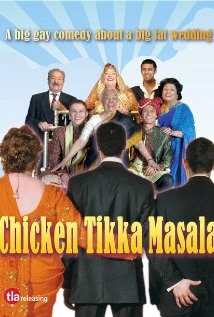
I finally gave in to Netflix's "suggested" list of films. Not sure why Netflix suggested Chicken Tikka Masala  - I'm guessing it's some combination of my ratings of Shah Rukh Khan, Hrithik Roshan, Bend It Like Beckham, and half a dozen other indy films about gay or lesbian second generation immigrants. But I really liked both the premise and the specifics of the (highly improbable) plot: a guy's very traditional Hindu family misunderstand a phone conversation and think he agrees to a hastily-arranged marriage to a good Indian girl, not realizing that his "best friend" is really his lover.

The delivery was a little uneven: I suspect the film was very low-budget, and the camera quality kind of shows it. Some of the dialogue is stilted, and some of the acting not quite convincing. Quite a few of the characters are sloppily stereotypical: the fat English boozehound, the Jamaican alcoholic, the eagerly horny Indian guest.

Overall, I liked it. It was made in the early-ish 2000s, during the "multi-culti" independent film craze, which produced a lot of films with similar predictable storylines about second generation Americans or Brits navigating the nuances of identity (immigrant, nationality, gayness, changing gender roles). Though I watched a lot of these movies in my own identity-navigating phases, I honestly can't get tired of them, even if have to be in the right mood to watch one. In general, I think they should be celebrated for bringing to light the struggles of a lot of different and overlapping communities to participate in civic life.

And then, coincidentally, of the four episodes of MI-5 (Series 8) I watched recently, one of them had a character and plot that semi-justified my deep love of this highly anti-civil liberties, pro-War on Terrorism show. A 17-year-old Indian Muslim recruited to infiltrate a Hindu nationalist group saves the day (and survives, which is rare on this show); but at the end of the episode had some of the more insightful and heartbreaking surface-level lines of the entire 10 seasons: "You're always busting in on Asians in the middle of the night and dragging them away... All I wanted was a game of football. [But] you played me, just like [opposing spy] played [opposing agent]."