Because I signed up to summit Mt Rainier this summer, La Otra Hermana suggested I read Bear Grylls' autobiography. Though I am permanently scarred from watching Man vs. Wild footage of him squeezing elephant dung in order to drink water while "stranded" in the savannah, I decided to read it because La OH never recommends books (the last one was The Maker's Diet).
Of course, La Otra Hermana did have ulterior motives: it turns out, Grylls is super-Christian. The first half of Mud, Sweat, and Tears is basically him detailing how pure grit and God got him through the grueling tryouts for the elite British Special Forces. The second half is how pure grit and God got him through the grueling climb up Mount Everest, when he became the youngest Brit (at the time) to summit.
It's not the most well-written book... and that's a kind understatement. There's also a definite "muscular Christianity" and vaguely colonial attitude underlying the stories he tells about his adventures, which gets a little uncomfortable at times.
I was surprised, though, that Grylls is actually from a pretty well-off, privileged family. There was one line that had me laughing out loud: when Grylls shows up for Special Forces training with a chum from Eton, they're heckled by trainers with shouts of "Where are the lads who speak like Prince Charles?"
What strangely does motivate me to train for Rainier? A mystery series set in ancient Athens. Maybe it's the Spartans as intimidating secondary characters, or the reminder of how marathons started, or the setting of the third book at the Olympics. But the series is thoroughly enjoyable, as well as hilarious.
Nicolaos is the fictitious older brother of the 12-year-old Socrates. He is commissioned by Pericles to solve a politically charged murder in the early days of Athenian democracy. Then he's dispatched to Ephesus, deep in the heart of the Persian-ruled part of ancient Greece, to see what an ostracized Themistocles is up to. Upon returning to Athens in time for the Olympics, he has to solve yet another murder in order to avert a war with Sparta.
I haven't taken classics since ninth grade, so I had to brush up on my ancient Greek history a bit after the first few chapters of The Pericles Commission. Then I breezed through the next two books because they're so wonderfully witty! Can't wait for the fourth book to come out sometime next year.
In the meantime, I have two weeks left of stairs, weighted backpacks, and pain. Lots of pain.
"[w]hat was any art but ... a sheath, a mould in which to imprison for a moment the shining, elusive element which is life itself - life hurrying past us and running away, too strong to stop, too sweet to lose." - Willa Cather, Song of the Lark
Friday, July 05, 2013
Sunday, May 05, 2013
The devil you know
Reading Michael Robotham is like watching a psychological thriller onscreen: it's horrifying, kind of predictable, and yet gruesomely addictive in a Seven, noir-esque kind of way.
I like how his books alternatingly follow the same cast of characters (a police detective, a policewoman, a psychologist).
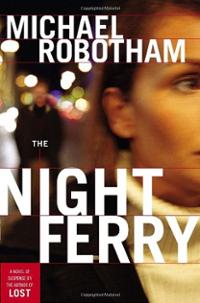
Night Ferry takes over where Lost leaves off -- and this time the narrator is the injured policewoman who heads to Holland's red light district to figure out who is smuggling pregnant immigrant girls to England to harvest their babies for adoption. In Shatter, Joe the psychologist is back to solve a series of grisly suicides. They all go rogue to solve horrific, extremely disturbing, and violent crimes. But their personal lives suffer, making it harder and harder to look away from the disturbing train wreck and put the book down.
You know what's also disturbing? Hearing a strange "rattle" sound and seeing this two feet away from your hiking boot.
Let's just say, I will be reading more Michael Robotham. But I probably won't go hiking in the eastern Cascades for a while.
I like how his books alternatingly follow the same cast of characters (a police detective, a policewoman, a psychologist).
Night Ferry takes over where Lost leaves off -- and this time the narrator is the injured policewoman who heads to Holland's red light district to figure out who is smuggling pregnant immigrant girls to England to harvest their babies for adoption. In Shatter, Joe the psychologist is back to solve a series of grisly suicides. They all go rogue to solve horrific, extremely disturbing, and violent crimes. But their personal lives suffer, making it harder and harder to look away from the disturbing train wreck and put the book down.
You know what's also disturbing? Hearing a strange "rattle" sound and seeing this two feet away from your hiking boot.
Let's just say, I will be reading more Michael Robotham. But I probably won't go hiking in the eastern Cascades for a while.
Monday, March 11, 2013
I have no gun, but I can spit
Because the first book in the Flavia de Luce series completely blew my mind, of COURSE I ran out and read the rest of the series.
With each book, the delightfully devious pre-teen heroine reveals something new about herself or her family's past. She was expelled from the Girl Guides. Like her mother, she's a genius. She still wears pigtails. She tries so, so hard to be an evil scientist but in reality is just a pre-adolescent who wants to hug hurting people all around her. She's morbidly obsessed with murder and death, but still believes in Father Christmas and concocts a brilliant plan to trap him in a chimney.
The literary nerd in me also loves Alan Bradley's series because each book includes so many references to English literature -- including two of my own favorites from my adolescence, "The Lady of Shallott" (Book 4) and "The Highwayman" (Book 5). The literary references are woven into the general narrative, so readers must be familiar with standard semi-famous lines from poems.
While the second and third books aren't as strong as the first, I think the fourth and fifths ones are. And the cliffhanger at the end of Speaking From Among the Bones has me eagerly awaiting Book 6's release early next year...
With each book, the delightfully devious pre-teen heroine reveals something new about herself or her family's past. She was expelled from the Girl Guides. Like her mother, she's a genius. She still wears pigtails. She tries so, so hard to be an evil scientist but in reality is just a pre-adolescent who wants to hug hurting people all around her. She's morbidly obsessed with murder and death, but still believes in Father Christmas and concocts a brilliant plan to trap him in a chimney.
The literary nerd in me also loves Alan Bradley's series because each book includes so many references to English literature -- including two of my own favorites from my adolescence, "The Lady of Shallott" (Book 4) and "The Highwayman" (Book 5). The literary references are woven into the general narrative, so readers must be familiar with standard semi-famous lines from poems.
While the second and third books aren't as strong as the first, I think the fourth and fifths ones are. And the cliffhanger at the end of Speaking From Among the Bones has me eagerly awaiting Book 6's release early next year...
Sunday, February 24, 2013
Eclipses in the sun and moon
Right on the heels of reading what now ranks as one of my favorite books by Ann Patchett, I read what is now among my least favorites. Taft centers on a Memphis bar manager's obsession with a young girl and her troubled brother. His own rocky relationship with the mother of his son guides his fantasies of what might have happened to the pair of siblings. Throw in a small dose of Tennessee's racial dynamics and underage teenagers, and that's basically the entire storyline.
I guess my main problem with the story was that the narrator's thoughts didn't match his actions. His self-destructive indiscretions came out of the blue and completely apart from the stream of consciousness to which the reader is privy. The same goes for most of the other characters. And, like so many other of Patchett's books, Taft ends with no resolution to any of its several story arcs.
Similarly, St. Lucy's Home for Girls Raised By Wolves left me uncomfortable while reading every short story in the collection. I really didn't like Swamplandia!, the novel based on one of the short stories in St. Lucy's.
To be clear, they are all incredibly well-written: descriptive, evocative, pathos-laden. Isolation, both emotional and physical, is manifest. Each one involves some sort of natural or human-made disaster: an avalanche, getting left in a giant conch shell overnight, being torn away from your wolf family to live with humans.
Karen Russell presents some fascinating and creative scenarios: a Minotaur on the Oregon Trail, part-wolf children sent to boarding schools, a family of alligator wrestlers. Some element of nature -- or of freaks of nature -- are central to each short story. Where a borderline sci-fi set-up isn't the norm, loss and separation is: two brothers in search of their sister's ghost, two boys stranded on a glacier, a girl left in a giant sea shell, kids plotting to misdirect seagoing turtles.
If there's anything that pervades the stories, it's melancholy. There's a barrenness, a core abandonment, that accompanies a change that the adolescent characters must face. But just like many of Patchett's stories, Karen Russell ends hers right at the cusp of when her characters are finally interesting.
The stories aren't as depressing as The Road. But it was hard to be pummeled with snapshots of dismal human experiences, ten unresolved tales in a row.
I guess my main problem with the story was that the narrator's thoughts didn't match his actions. His self-destructive indiscretions came out of the blue and completely apart from the stream of consciousness to which the reader is privy. The same goes for most of the other characters. And, like so many other of Patchett's books, Taft ends with no resolution to any of its several story arcs.
Similarly, St. Lucy's Home for Girls Raised By Wolves left me uncomfortable while reading every short story in the collection. I really didn't like Swamplandia!, the novel based on one of the short stories in St. Lucy's.
To be clear, they are all incredibly well-written: descriptive, evocative, pathos-laden. Isolation, both emotional and physical, is manifest. Each one involves some sort of natural or human-made disaster: an avalanche, getting left in a giant conch shell overnight, being torn away from your wolf family to live with humans.
Karen Russell presents some fascinating and creative scenarios: a Minotaur on the Oregon Trail, part-wolf children sent to boarding schools, a family of alligator wrestlers. Some element of nature -- or of freaks of nature -- are central to each short story. Where a borderline sci-fi set-up isn't the norm, loss and separation is: two brothers in search of their sister's ghost, two boys stranded on a glacier, a girl left in a giant sea shell, kids plotting to misdirect seagoing turtles.
If there's anything that pervades the stories, it's melancholy. There's a barrenness, a core abandonment, that accompanies a change that the adolescent characters must face. But just like many of Patchett's stories, Karen Russell ends hers right at the cusp of when her characters are finally interesting.
The stories aren't as depressing as The Road. But it was hard to be pummeled with snapshots of dismal human experiences, ten unresolved tales in a row.
Saturday, February 23, 2013
L'état, c'est moi
In my quest for a new, well-written, engaging mystery series with a female protagonist, I failed miserably in selecting The State of the Onion. Theoretically, it could have been great: the main character and unwilling detective is a sous chef at the White House. However, the characters were all so overly caricatured (the scheming staffer, the bitchy cooking show host, the kindly head chef, the Middle Eastern terrorists, the elusive international criminal) that the book wasn't very satisfying. I won't continue to read the series.
Another State completely captivated me, however: Ann Patchett's State of Wonder.
The story of a scientist sent to the Amazon to discover details about the research project a colleague was working on when he disappeared, I think it rivals Bel Canto for my favorite Patchett book. (Hmm..... both take place in South America.)
Like Bel Canto, a certain suspension of belief is necessary in order to melt into the storyline. But the scenarios are just real enough to make them excruciatingly compelling. And unlike so many other of Patchett's books, this one actually ends with some sort of resolution to the plot, rather than annoyingly in media res.State of Wonder encapsulates so many overlapping scientific and anthropological quandaries: pharmaceutical companies stripping the earth of resources and "primitive" cultures of privacy in pursuit of profitable life-saving drugs, the amorphous concepts of life and death in human-induced situations, and that damned illusory Fountain of Youth. What happens when a U.S. drug company wants something that an isolated tribe in South America takes for granted, with only a team of researchers and hundreds of miles of jungle keeping the two apart? How do individuals caught in two colliding worlds alter their values, their behavior, their beliefs? It's such a fascinating and gripping tale.
Another State completely captivated me, however: Ann Patchett's State of Wonder.
The story of a scientist sent to the Amazon to discover details about the research project a colleague was working on when he disappeared, I think it rivals Bel Canto for my favorite Patchett book. (Hmm..... both take place in South America.) Like Bel Canto, a certain suspension of belief is necessary in order to melt into the storyline. But the scenarios are just real enough to make them excruciatingly compelling. And unlike so many other of Patchett's books, this one actually ends with some sort of resolution to the plot, rather than annoyingly in media res.State of Wonder encapsulates so many overlapping scientific and anthropological quandaries: pharmaceutical companies stripping the earth of resources and "primitive" cultures of privacy in pursuit of profitable life-saving drugs, the amorphous concepts of life and death in human-induced situations, and that damned illusory Fountain of Youth. What happens when a U.S. drug company wants something that an isolated tribe in South America takes for granted, with only a team of researchers and hundreds of miles of jungle keeping the two apart? How do individuals caught in two colliding worlds alter their values, their behavior, their beliefs? It's such a fascinating and gripping tale.
Saturday, February 02, 2013
Sing with me the songs we knew
Because the 10th Anniversary Les Mis soundtrack got me through college (along with the soundtrack to Top Gun), of COURSE I ran out to see the movie with La Madre on opening day. Then I dragged The Planning Committee to see it 10 days later. Both times I sang heartily and proudly (despite La Madre's embarrassed whispers to please stop).
The first third is a bit difficult to get into, mainly because Russel Crowe as Javert is completely horrible. Javert is a pretty nuanced character whose strict adherence to the letter of the law stems from his own background. But Crowe's bad singing doesn't capture any of that. Hugh Jackson as Valjean was good but again, in the first third of the movie, seemed stilted.
However, once the storyline moves to Paris in 1832, then the movie picks up its pace.
It's the first production of Les Mis where I've actually liked Marius better than Enjolras. (At a recent local improv show, an actor imitated Marius by running around saying "Where's Cosette? She's so beautiful!" which has pretty much been my low impression of him for almost two decades.)
I was satisfied with the delivery of all of my favorite songs ("I Dreamed a Dream," "Do You Hear the People Sing,""Red and Black," "One Day More," and "Empty Chairs at Empty Tables." Even Crowe did a halfway decent job with "Stars.") But both "On My Own" and "Drink With Me" had verses inexplicably cut out, which I did not appreciate because it messed with my personal public sing-a-long.
The last fifteen minutes of the film are a pure sob fest, with Valjean's death and the ending scene at the barricade.
If someone wasn't already prone to loving Victor Hugo's classic or Cameron Mackintosh's theatrical brilliance, I don't see how this movie changes that. It's really only enjoyable if the viewer is already a Les Mis nerd (I literally clapped my hands like a dork when Colm Wilkinson came onscreen as the Bishop).
WaitingwaitingwaitingOMGwaiting to own the DVD!
The first third is a bit difficult to get into, mainly because Russel Crowe as Javert is completely horrible. Javert is a pretty nuanced character whose strict adherence to the letter of the law stems from his own background. But Crowe's bad singing doesn't capture any of that. Hugh Jackson as Valjean was good but again, in the first third of the movie, seemed stilted.
However, once the storyline moves to Paris in 1832, then the movie picks up its pace.
It's the first production of Les Mis where I've actually liked Marius better than Enjolras. (At a recent local improv show, an actor imitated Marius by running around saying "Where's Cosette? She's so beautiful!" which has pretty much been my low impression of him for almost two decades.)
I was satisfied with the delivery of all of my favorite songs ("I Dreamed a Dream," "Do You Hear the People Sing,""Red and Black," "One Day More," and "Empty Chairs at Empty Tables." Even Crowe did a halfway decent job with "Stars.") But both "On My Own" and "Drink With Me" had verses inexplicably cut out, which I did not appreciate because it messed with my personal public sing-a-long.
The last fifteen minutes of the film are a pure sob fest, with Valjean's death and the ending scene at the barricade.
If someone wasn't already prone to loving Victor Hugo's classic or Cameron Mackintosh's theatrical brilliance, I don't see how this movie changes that. It's really only enjoyable if the viewer is already a Les Mis nerd (I literally clapped my hands like a dork when Colm Wilkinson came onscreen as the Bishop).
WaitingwaitingwaitingOMGwaiting to own the DVD!
Sunday, January 27, 2013
This changes everything
On the recommendation of a friend, I read The Sweetness at the Bottom of the Pie, and completely fell in love with the precocious 11-year-old poison-obsessed detective heroine. Though the protagonist is a tween, the book is not for young adults.It's HILARIOUS. Flavia de Luce, the narrator, lives in dire financial times on her family's ancient estate with her philatelist father and two older sisters. To escape her siblings' taunting and the absence of the mother she never knew, Flavia spends much of her time in her personal chemistry laboratory sating her intellectual curiosity or plotting revenge. When a murder occurs on her family's property, she is morbidly fascinated by it, and pedals off on her bicycle across the English countryside to elude the police and solve the case on her own.
The book's brillance stems from Flavia's isolating, in-between age: she's too old to be babysat but too young still to have her input taken seriously by grown-ups. With snide potshots at her sisters and acerbic observations about the adults around her, she's an incredibly delightful heroine.
On the complete opposite end of the spectrum is the sequel to The Girl is Murder, a noir-lite book for young adults. I didn't exactly love Book 1, but The Girl is Trouble is slightly better (if vastly more disturbing in content).For starters, it wraps up the huge loose end of teen detective Iris' mother's death. While the reader (and Iris) have long thought she committed suicide, Trouble brings the sinister truth to light in a way that wraps up most of the other loose ends from the first book. Whereas bobby soxers and high school cliques dominated the story in Murder, infiltration of the American Bund becomes the center of Trouble's gruesome mystery.
I think the titles for the two books should be swapped to better reflect their content.
But really, The Sweetness at the Bottom of the Pie knocks any book with a young protagonist detective out of the ballpark.
Tuesday, January 22, 2013
Some relish of the saltiness of time
After a few of Sharon Creech's books for young adults that weren't exactly my cup of tea, I finally read two back-to-back that were!
Bloomability is the story of a girl who never had a "real" home due to her parents' nomadic life. Dinnie, the main character, grows up poor; after her sister becomes a teenage mother and her brother winds up in jail, her aunt and uncle whisk her off for a year at a boarding school in Switzerland. (Parent Trap flashbacks, anyone?) It's a cute tale about studying abroad, making new friends, dealing with homesickness, and fitting personal experiences into a larger global framework. The end of the book is unresolved: Dinnie returns to America for the summer, and she hasn't decided yet if she'll stay or not. Though the book is really about tweenhood and identity, I couldn't help but see it through the lens of educational opportunity: DUH, she should return to Switzerland!
There's also an avalanche scene in the book, which 1) reminded me of this incredibly written but scary NYT piece on the avalanche at nearby Stevens Pass last year; and 2) started to freak me out about avalanches while I'm out snowshoeing.
Chasing Redbird was a bittersweet story about another tween, the middle child of a rather large family. She spends a summer clearing an old trail behind her family's property in the Appalachians. By re-building the trail, she comes to terms with several deaths in her family.
The thing I do like about Creech's protagonists is that they don't come from "perfect" homes; they are generally from struggling or non-traditional families or rural areas, and there is usually some event (birth or death or illness or separation) that provides the catalyst for the angst and apprehensions of her young characters. Though her stories must be wonderful for young readers who can relate to their growing-up themes, her characters are sometimes wiser than many real-life adults who have yet to encounter hardships.
Bloomability is the story of a girl who never had a "real" home due to her parents' nomadic life. Dinnie, the main character, grows up poor; after her sister becomes a teenage mother and her brother winds up in jail, her aunt and uncle whisk her off for a year at a boarding school in Switzerland. (Parent Trap flashbacks, anyone?) It's a cute tale about studying abroad, making new friends, dealing with homesickness, and fitting personal experiences into a larger global framework. The end of the book is unresolved: Dinnie returns to America for the summer, and she hasn't decided yet if she'll stay or not. Though the book is really about tweenhood and identity, I couldn't help but see it through the lens of educational opportunity: DUH, she should return to Switzerland!
There's also an avalanche scene in the book, which 1) reminded me of this incredibly written but scary NYT piece on the avalanche at nearby Stevens Pass last year; and 2) started to freak me out about avalanches while I'm out snowshoeing.
Chasing Redbird was a bittersweet story about another tween, the middle child of a rather large family. She spends a summer clearing an old trail behind her family's property in the Appalachians. By re-building the trail, she comes to terms with several deaths in her family.
The thing I do like about Creech's protagonists is that they don't come from "perfect" homes; they are generally from struggling or non-traditional families or rural areas, and there is usually some event (birth or death or illness or separation) that provides the catalyst for the angst and apprehensions of her young characters. Though her stories must be wonderful for young readers who can relate to their growing-up themes, her characters are sometimes wiser than many real-life adults who have yet to encounter hardships.
Wednesday, January 16, 2013
Winged Cupid painted blind
I did, in fact, time my reading pile perfectly so that I would be reading The Twelve Clues of Christmas on Christmas Day. The latest in Rhys Bowen's gleefully delightful Royal Spyness mystery series, it did not disappoint. It took the romanticized notion of a "classic" and "traditional" English country Christmas to a different level. But one of the best plot developments for Lady Georgiana fans is that our heroine can finally stop worrying about her dashing Irish suitor; (SPOILER ALERT!) they finally get engaged in this cheerful holiday book. The reader no longer feels strung along after 6 books...
... unlike Victoria Thompson's Gaslight mystery series, where our Knickerbocker-turned-midwife and her Irish police captain are still doing the "will-we-or-won't-we" dance after 12 --12!-- books.
In Murder on Bank Street, Sarah's husband's cold case murder is finally solved. (So at least that's one loose end wrapped up.) However, with the two children our heroine has adopted comes the introduction of more mysteries about characters' pasts. In Murder on Waverly Place, one of those pasts comes to light during a seance. (Because what mystery series taking place in the late 19th or early 20th centuries is complete without exposing a seance as fraudulent while solving a murder? Rhys Bowen herself did it with the Molly Murphy series.)
But the most fascinating Gaslight book in a long time is Murder on Lexington Avenue, which addresses the different approaches to education for the deaf: sign language versus lip reading. The same issues and arguments for and against both sides still exist: create and build up a supportive deaf community around a shared (signed) language, or assimilate into the hearing world by learning to "hear" spoken words differently? As a deaf college friend of mine has taught me, the development of the cochlear implant has also added another layer to this debate. At any rate, Thompson created a great mystery story that revolves around the controversy.
In related news, Alexander Graham Bell supported the eugenics movement and hated immigrants and sign langauge. Even during flights of escapism through fiction, it's never really possible to truly free fall.
... unlike Victoria Thompson's Gaslight mystery series, where our Knickerbocker-turned-midwife and her Irish police captain are still doing the "will-we-or-won't-we" dance after 12 --12!-- books.
In Murder on Bank Street, Sarah's husband's cold case murder is finally solved. (So at least that's one loose end wrapped up.) However, with the two children our heroine has adopted comes the introduction of more mysteries about characters' pasts. In Murder on Waverly Place, one of those pasts comes to light during a seance. (Because what mystery series taking place in the late 19th or early 20th centuries is complete without exposing a seance as fraudulent while solving a murder? Rhys Bowen herself did it with the Molly Murphy series.)
But the most fascinating Gaslight book in a long time is Murder on Lexington Avenue, which addresses the different approaches to education for the deaf: sign language versus lip reading. The same issues and arguments for and against both sides still exist: create and build up a supportive deaf community around a shared (signed) language, or assimilate into the hearing world by learning to "hear" spoken words differently? As a deaf college friend of mine has taught me, the development of the cochlear implant has also added another layer to this debate. At any rate, Thompson created a great mystery story that revolves around the controversy.
In related news, Alexander Graham Bell supported the eugenics movement and hated immigrants and sign langauge. Even during flights of escapism through fiction, it's never really possible to truly free fall.
Sunday, December 23, 2012
Rocking, reeling, rolling
Much like Rhys Bowen's Molly Murphy mysteries, Victoria Thompson's Gaslight series offers
a short little walking tour of Manhattan with each book.
In Books 7, 8, and 9, our Knickerbocker-turned-midwife heroine sees more of the ethnic blend that was (and still is) New York.
I figured out who the murderers were in 2 of the 3 books, however. It's always half delightful, half disappointing when that happens.
In Books 7, 8, and 9, our Knickerbocker-turned-midwife heroine sees more of the ethnic blend that was (and still is) New York.
I figured out who the murderers were in 2 of the 3 books, however. It's always half delightful, half disappointing when that happens.
Tuesday, December 18, 2012
Exempt from public haunt
The library books are piling up, but I'm determined to keep my overdue fine-free streak! So now I have a whole algorithm for determining which books to renew, and which ones to return and then re-check out when next available.
Olive Kitteridge was a collection of stories from a small town in Maine, all featuring retired school teacher Olive at some point in her adult life. In many of the stories, she is the main character; in others, she figures tangentially.
Stepping back, the book is a pretty intricate portrait of sadness and breakdowns in relationships. Strout showcases the desperate slowness before suicide attempts and affairs; and during weddings, funerals, breakups, and end-of-life care. Through it all, the Maine seasons roll by.
It reminded me of another rather gray depiction of a life loved and lost in a small New England town: Ethan Frome. (Given that that classic is one of the most dismal stories I've ever read, I don't know that that's a compliment.)
Sharon Creech's young adult books are always hit-or-miss for me.
The Great Unexpected is one of the ones I don't exactly love. The story is about two girls in foster care in a podunk American town who meet a mysterious boy who falls from the sky. But it bridges reality and fantasy in jarring ways: Irish magic, crows as omens, and witches exist alongside kids who have to "share" about their dysfunctional families for a school assignment (which is both funny and sad).
My main source of frustration is that I liked parts here and there of the story: the backgrounds of the people in the girls' lives, the mystery of the cackling old lady who always wants to "have a murder," the Tim Burton atmosphere of the small town. It was just too short of a book to weave it all together properly... for an adult reader, at least.
Olive Kitteridge was a collection of stories from a small town in Maine, all featuring retired school teacher Olive at some point in her adult life. In many of the stories, she is the main character; in others, she figures tangentially.
Stepping back, the book is a pretty intricate portrait of sadness and breakdowns in relationships. Strout showcases the desperate slowness before suicide attempts and affairs; and during weddings, funerals, breakups, and end-of-life care. Through it all, the Maine seasons roll by.
It reminded me of another rather gray depiction of a life loved and lost in a small New England town: Ethan Frome. (Given that that classic is one of the most dismal stories I've ever read, I don't know that that's a compliment.)
Sharon Creech's young adult books are always hit-or-miss for me.The Great Unexpected is one of the ones I don't exactly love. The story is about two girls in foster care in a podunk American town who meet a mysterious boy who falls from the sky. But it bridges reality and fantasy in jarring ways: Irish magic, crows as omens, and witches exist alongside kids who have to "share" about their dysfunctional families for a school assignment (which is both funny and sad).
My main source of frustration is that I liked parts here and there of the story: the backgrounds of the people in the girls' lives, the mystery of the cackling old lady who always wants to "have a murder," the Tim Burton atmosphere of the small town. It was just too short of a book to weave it all together properly... for an adult reader, at least.
Wednesday, December 05, 2012
Armed through our watch
I forget how Michael Robotham's Lost made its way to my reading list, but it was so addictive that I ran out and reserved his other books in the series.
Not quite noir, the books are gritty thrillers instead of rosy English mystery novels. They take place, sometimes literally, in the underbelly of London: the characters move amongst mobsters, prostitutes, crooked cops, drug addicts, pedophiles. Robotham does such a great job of making the reader empathize and identify with the main characters, it was hard to stop reading.
Lost, the second book featuring a psychologist and quasi-detective, features a down-and-out police inspector who is found shot and floating in the Thames. The book has him, with the help of his psychologist friend, attempting to solve the mystery of what happened to him before he's arrested for crimes he can't be sure he didn't commit.
Suspect, the first book, features the same two characters before they were friends. The detective is a hard-ass on the psychologist, who is the main suspect in a series of murders. It's odd having read the first book second (knowing the outcome but not the important details). But each is still good as an independent, suspense-ridden story.
Not quite noir, the books are gritty thrillers instead of rosy English mystery novels. They take place, sometimes literally, in the underbelly of London: the characters move amongst mobsters, prostitutes, crooked cops, drug addicts, pedophiles. Robotham does such a great job of making the reader empathize and identify with the main characters, it was hard to stop reading.
Lost, the second book featuring a psychologist and quasi-detective, features a down-and-out police inspector who is found shot and floating in the Thames. The book has him, with the help of his psychologist friend, attempting to solve the mystery of what happened to him before he's arrested for crimes he can't be sure he didn't commit.
Suspect, the first book, features the same two characters before they were friends. The detective is a hard-ass on the psychologist, who is the main suspect in a series of murders. It's odd having read the first book second (knowing the outcome but not the important details). But each is still good as an independent, suspense-ridden story.
Friday, November 23, 2012
At the end of the day you're another day older
I'd never heard of Jeannette Walls, but her memoir joined my reading list when I was adding NYT bestseller books to it.
The Glass Castle details Walls' family life, focusing on how she and her siblings coped with hunger and poverty and an alcoholic father and an indifferent mother. Their parents moved frequently, every few months or so, across towns throughout the Southwest until eventually settling with relatives in West Virginia.
Amazingly, the siblings all move to New York City and manage to escape the utter penury their parents made their norm.
Parts of it were painfully and personally familier -- an alcoholic father who frequently uprooted the family on "adventures" -- and so maybe that was why I kept reading. There's a camaraderie of sorts in seeing part of your own story in someone else's. It's odd, the reviews on the back of the book discussed how it was a touching tribute to her parents, but I didn't interpret it that way. I think her most heartfelt moments are for her brother and sister: the book poignantly captures the strong bond between them, forged out the usual sibling shared experiences but also out of the absolute necessity for survival.
I was a little disappointed in the pace set for the last few chapters, though. Where Walls spends the vast majority of the book going over her childhood memories within a span of a few years, she basically glosses over her teenage and adult life as she made the transition to independence and self-sufficiency. As an autobiography, the closer she got to the present, it seemed liked she wanted to keep more things private. The detailed descriptions of social situations from her childhood did not carry over to details in her adult life -- situations that must have arisen more frequently than mentioned, especially for a Barnard student hiding the fact that she has homeless parents and grew up going days with no food. In my opinion, that detracted from the story and made it a teensy bit less powerful.
On a related note, I watched The Blind Side in my post-turkey haze on Thanksgiving. Mi Hermana, Mi Cunado, and the sobrinas y neffy were all laid low with the stomach flu, and there was little to do but watch TV.
I have a hard time understanding how Sandra Bullock beat out four other women for Best Actress with this movie. I know it's based on a true story as well as a book, but it's still a predictable rags-to-riches tale about an inner city black boy with a crack addict mother who is given a chance at success by rich white people, perseveres and does well in school against the odds, goes on to get an athletic scholarship to college, and then becomes a celebrated pro football star.
It had its moments, though. There were some funny scenes, some touching scenes, some thought-provoking scenes. But if falls so neatly in line with the American bootstrap narrative, I think that's the only reason it did so well in theatres and received so many accolades. Otherwise, it's not that great a movie.
To be sure, The Glass Castle also falls into the rags-to-riches American mythology. But the blatant racialized components are absent, as are the tangible class dynamics. I think The Glass Castle would make a better movie because the specifics that Walls shares about her life are so unpredictably destitute and heartbreaking. Her family's struggles also do not end with her becoming a famous writer; there would be no glorious epilogue rolling during the credits.
But of course, The Blind Side was the blockbuster.
The Glass Castle details Walls' family life, focusing on how she and her siblings coped with hunger and poverty and an alcoholic father and an indifferent mother. Their parents moved frequently, every few months or so, across towns throughout the Southwest until eventually settling with relatives in West Virginia.
Amazingly, the siblings all move to New York City and manage to escape the utter penury their parents made their norm.
Parts of it were painfully and personally familier -- an alcoholic father who frequently uprooted the family on "adventures" -- and so maybe that was why I kept reading. There's a camaraderie of sorts in seeing part of your own story in someone else's. It's odd, the reviews on the back of the book discussed how it was a touching tribute to her parents, but I didn't interpret it that way. I think her most heartfelt moments are for her brother and sister: the book poignantly captures the strong bond between them, forged out the usual sibling shared experiences but also out of the absolute necessity for survival.
I was a little disappointed in the pace set for the last few chapters, though. Where Walls spends the vast majority of the book going over her childhood memories within a span of a few years, she basically glosses over her teenage and adult life as she made the transition to independence and self-sufficiency. As an autobiography, the closer she got to the present, it seemed liked she wanted to keep more things private. The detailed descriptions of social situations from her childhood did not carry over to details in her adult life -- situations that must have arisen more frequently than mentioned, especially for a Barnard student hiding the fact that she has homeless parents and grew up going days with no food. In my opinion, that detracted from the story and made it a teensy bit less powerful.
On a related note, I watched The Blind Side in my post-turkey haze on Thanksgiving. Mi Hermana, Mi Cunado, and the sobrinas y neffy were all laid low with the stomach flu, and there was little to do but watch TV.
I have a hard time understanding how Sandra Bullock beat out four other women for Best Actress with this movie. I know it's based on a true story as well as a book, but it's still a predictable rags-to-riches tale about an inner city black boy with a crack addict mother who is given a chance at success by rich white people, perseveres and does well in school against the odds, goes on to get an athletic scholarship to college, and then becomes a celebrated pro football star.
It had its moments, though. There were some funny scenes, some touching scenes, some thought-provoking scenes. But if falls so neatly in line with the American bootstrap narrative, I think that's the only reason it did so well in theatres and received so many accolades. Otherwise, it's not that great a movie.
To be sure, The Glass Castle also falls into the rags-to-riches American mythology. But the blatant racialized components are absent, as are the tangible class dynamics. I think The Glass Castle would make a better movie because the specifics that Walls shares about her life are so unpredictably destitute and heartbreaking. Her family's struggles also do not end with her becoming a famous writer; there would be no glorious epilogue rolling during the credits.
But of course, The Blind Side was the blockbuster.
Monday, November 19, 2012
Another yellow moon
The Gaslight series has become immensely addictive.
After finishing the fourth, fifth, and sixth books in the series with Sarah-the-mystery-solving-widow-midwife, I've come to the conclusion that the mysteries themselves are not what draws me in; it's the side plot involving the deaf and formerly crippled son of her friend and crime-solving partner. (I'm shockingly indifferent to whether or not the two of them get beyond their Victorian class divide to develop a romance, or whether or not Sarah's husband's murder is ever solved.)
Having said that, Murder on Washington Square sees a significant development in the socially unacceptable friendship between the Knickerbocker-turned-midwife and the Irish police captain. And Murder on Mulberry Bend has a significant development in the mystery around Sarah's husband's murder years before.
The other aspect of the series that recently dawned on me is that Thompson always takes some . The climactic scenes where the murderers are revealed tend to be dramatic, over-the-top, socially shocking scenarios (everything from an incestuous couple running out to the rooftops in a thunderstorm, to a cross-dressing actor pulling a Norman Bates). In a way, the underlying sensationalism complements the prim and proper veneer of 19th century society rules.
Bizarre and lurid as the endings can get, however, I was a little disappointed that I picked up on the clues and guessed the identity and motives for the culprits in Books 4 and 5 long before the middle of the story. Murder on Marble Row, however, had an unexpected conclusion. So I can rest easy that I won't get bored with the rest of the series!
After finishing the fourth, fifth, and sixth books in the series with Sarah-the-mystery-solving-widow-midwife, I've come to the conclusion that the mysteries themselves are not what draws me in; it's the side plot involving the deaf and formerly crippled son of her friend and crime-solving partner. (I'm shockingly indifferent to whether or not the two of them get beyond their Victorian class divide to develop a romance, or whether or not Sarah's husband's murder is ever solved.)
Having said that, Murder on Washington Square sees a significant development in the socially unacceptable friendship between the Knickerbocker-turned-midwife and the Irish police captain. And Murder on Mulberry Bend has a significant development in the mystery around Sarah's husband's murder years before.
The other aspect of the series that recently dawned on me is that Thompson always takes some . The climactic scenes where the murderers are revealed tend to be dramatic, over-the-top, socially shocking scenarios (everything from an incestuous couple running out to the rooftops in a thunderstorm, to a cross-dressing actor pulling a Norman Bates). In a way, the underlying sensationalism complements the prim and proper veneer of 19th century society rules.
Bizarre and lurid as the endings can get, however, I was a little disappointed that I picked up on the clues and guessed the identity and motives for the culprits in Books 4 and 5 long before the middle of the story. Murder on Marble Row, however, had an unexpected conclusion. So I can rest easy that I won't get bored with the rest of the series!
Saturday, November 17, 2012
On track
Though I love reading Ann Patchett, after reading Run I've realized a trend in my reactions to her books: I get very engrossed in the characters and scenarios from page one, and then feel like the ending is always too neatly and swiftly wrapped up, and feel a little cheated of important character developments.
Run was no different. Though I liked the first 95% of the book, the last chapter glosses over the lives of the characters after a tragedy that necessarily changes them. Then the epilogue picks up years later, with the same characters in very different lives. (The endings to Bel Canto and Patron Saint of Liars were similarly disjointed and disorienting, after the beautifully crafted, compelling character maps of the rest of the books.)
Run takes place in Boston, over a period of 24 hours after a car accident. The characters are neighbors in that way that worlds collide on every other street in Boston: rich and poor, black and white, Catholic and irreligious, academic and skilled worker. The story itself is cute, though improbable: the privileged former mayor takes care of the young girl whose mother has been injured. His two adopted sons are forced to think about the mother who gave them up for adoption, and his biological son contemplates a car accident years before that altered his relationship with his father.
What left me unsatisfied, however, was the lack of character depth for the girl's mother: though her actions explain a lot of the book, the reader never quite gets into her head. Then there's the reality of Boston, a city (like many old cities with centuries of privilege and inequality) where identity and opportunity are often synonymous. Half the time while reading, I kept thinking "This could never happen in Boston." And yet there's a grain of believability because it couldn't happen anywhere else. (But maybe the part that's believable is really just the buried hope that one day, America can give children of every race and class a good education and an equal opportunity to achieve their dreams.)
The absence of overt racism also added to the book's unbelievability.* I think Patchett did a wonderful job of highlighting the gulf between the clueless (but highly educated) privileged echelons and the working class families struggling to stay out of poverty. She also showed how class and race can be intertwined in a city with very real historical and enduring segregation. However, for a story about worlds colliding (and one in which half the main characters are black), there were remarkably few instances involving racism.
In short, the book is a very different take on that "great" old American favorite, the rags-to-riches tale. It's really cute and magical if we suspend belief and social realities. We want it to be possible because it ignores the injustices we've created and can't solve.
* Yes, I'm still jealous that a ton of my friends got to go this year's Facing Race conference, where Junot Diaz gave an amazing keynote speech (or so I could infer from the Twitter hashtag stream I was following from home on a Friday night).
Run was no different. Though I liked the first 95% of the book, the last chapter glosses over the lives of the characters after a tragedy that necessarily changes them. Then the epilogue picks up years later, with the same characters in very different lives. (The endings to Bel Canto and Patron Saint of Liars were similarly disjointed and disorienting, after the beautifully crafted, compelling character maps of the rest of the books.)
Run takes place in Boston, over a period of 24 hours after a car accident. The characters are neighbors in that way that worlds collide on every other street in Boston: rich and poor, black and white, Catholic and irreligious, academic and skilled worker. The story itself is cute, though improbable: the privileged former mayor takes care of the young girl whose mother has been injured. His two adopted sons are forced to think about the mother who gave them up for adoption, and his biological son contemplates a car accident years before that altered his relationship with his father.
What left me unsatisfied, however, was the lack of character depth for the girl's mother: though her actions explain a lot of the book, the reader never quite gets into her head. Then there's the reality of Boston, a city (like many old cities with centuries of privilege and inequality) where identity and opportunity are often synonymous. Half the time while reading, I kept thinking "This could never happen in Boston." And yet there's a grain of believability because it couldn't happen anywhere else. (But maybe the part that's believable is really just the buried hope that one day, America can give children of every race and class a good education and an equal opportunity to achieve their dreams.)
The absence of overt racism also added to the book's unbelievability.* I think Patchett did a wonderful job of highlighting the gulf between the clueless (but highly educated) privileged echelons and the working class families struggling to stay out of poverty. She also showed how class and race can be intertwined in a city with very real historical and enduring segregation. However, for a story about worlds colliding (and one in which half the main characters are black), there were remarkably few instances involving racism.
In short, the book is a very different take on that "great" old American favorite, the rags-to-riches tale. It's really cute and magical if we suspend belief and social realities. We want it to be possible because it ignores the injustices we've created and can't solve.
* Yes, I'm still jealous that a ton of my friends got to go this year's Facing Race conference, where Junot Diaz gave an amazing keynote speech (or so I could infer from the Twitter hashtag stream I was following from home on a Friday night).
Saturday, October 27, 2012
No bigger than an agate stone
While waiting for the next Daisy Dalrymple books to arrive from the library and paperbackswap,
I managed to find another great mystery series! (Yay, Amazon suggestions.)
Victoria Thompson's Gaslight series features Sarah Brandt, a widowed midwife in late-19th century New York City.
What I like about the storyline is the development of Sarah's friendship with an enigmatic police detective. In the first book, the police sergeant is gruff and suspicious of Sarah, who left her privileged background when she married a doctor years before. By the end of the book, when they've reluctantly worked together to solve the murder of a girl in a boarding house, the reader learns that Sgt. Malloy has a "feeble-minded", disfigured toddler son. By the end of the second book, they've teamed up again to solve a series of murders of working-class girls who exchange their favors for baubles. But even more interestingly, we discover that the supposedly "feeble-minded" son is actually deaf and that his club foot is operable. In Book 3, Malloy takes Sarah's advice and seeks the advice of doctors and schools for the deaf to see what options are available for his son (oh, and they solve the murder of a quack doctor in the process).
I think I'm fixating on the deaf and disabled toddler son (who is definitely a minor, minor -- haha-- character in the books) because I've been Skyping my nieces and neffies a lot lately, what with a new nephew and starting kindergarten and preschool and all. But whatevs, every reader brings their own personal biases to a series. I happen to like this one... and not because mi dos hermanas both had midwives for their last deliveries, either. Or 'k, maybe that makes me more partial to Sarah as the main character. As the holidays near, I've been poring over Snapfish photos of all the wee ones and keep thinking that they grow up so damn fast!
Anyways, unlike the Daisy Dalrymple series, which is very much in the vein of Dame Christie (where the mysteries are solved in large rooms with relatively little cliffhanger drama at the end), the Gaslight series features the cases being solved in extremely dramatic ways. Perhaps this is the American tradition in the genre? At any rate, the series is thoroughly enjoyable; and it serves its purpose as a method of escapism during this rainy GOTV season.
Victoria Thompson's Gaslight series features Sarah Brandt, a widowed midwife in late-19th century New York City.
What I like about the storyline is the development of Sarah's friendship with an enigmatic police detective. In the first book, the police sergeant is gruff and suspicious of Sarah, who left her privileged background when she married a doctor years before. By the end of the book, when they've reluctantly worked together to solve the murder of a girl in a boarding house, the reader learns that Sgt. Malloy has a "feeble-minded", disfigured toddler son. By the end of the second book, they've teamed up again to solve a series of murders of working-class girls who exchange their favors for baubles. But even more interestingly, we discover that the supposedly "feeble-minded" son is actually deaf and that his club foot is operable. In Book 3, Malloy takes Sarah's advice and seeks the advice of doctors and schools for the deaf to see what options are available for his son (oh, and they solve the murder of a quack doctor in the process).
I think I'm fixating on the deaf and disabled toddler son (who is definitely a minor, minor -- haha-- character in the books) because I've been Skyping my nieces and neffies a lot lately, what with a new nephew and starting kindergarten and preschool and all. But whatevs, every reader brings their own personal biases to a series. I happen to like this one... and not because mi dos hermanas both had midwives for their last deliveries, either. Or 'k, maybe that makes me more partial to Sarah as the main character. As the holidays near, I've been poring over Snapfish photos of all the wee ones and keep thinking that they grow up so damn fast!
Anyways, unlike the Daisy Dalrymple series, which is very much in the vein of Dame Christie (where the mysteries are solved in large rooms with relatively little cliffhanger drama at the end), the Gaslight series features the cases being solved in extremely dramatic ways. Perhaps this is the American tradition in the genre? At any rate, the series is thoroughly enjoyable; and it serves its purpose as a method of escapism during this rainy GOTV season.
Wednesday, October 24, 2012
Through a glass darkly
I read Wicked years ago during a cold, gray New England winter. And as part of a fundraiser for Approve R 74, I finally saw the Broadway musical... on a cold, gray, unusually torrential Seattle autumn evening.
The book intrigued me with its nuanced stories of power and oppression in Oz. It was a dark tale, but it was spun with great skill and creativity.
A musical, however, must have a happy ending -- that's what all the song-and-dance cheesiness is about. And it did, in fact, so drastically deviate from the book that it's better to think of them as different stories altogether.
Unlike the book, the heart of the play is the friendship between Elphaba (the Wicked Witch of the West) and Glinda (the Good Witch). The vocal talents of the two main characters are amazing. (I had "Defying Gravity," which I've only ever heard on Glee, stuck in my head the entire day before seeing the show.) Most of the story takes place during their time at boarding school. And the musical only touches tangentially on issues like the Wizard's oppression of the Animals and the slavery of the Munchkins. The main theme of the play is seeing the alternate views in everything -- in official histories, in standards of beauty.
I've always loved musicals, and this was no exception.
Sacre Bleu had a similar "alternate history" take, though in no other way can it be compared to Wicked. Like he did with Fool, Christopher Moore tells a story from a different perspective in Sacre Bleu.
From Vincent Van Gogh's death to Henri de Toulouse-Lautrec's debauchery, Moore spins a weird but slightly interesting story about Art, artists, love, and inspiration. In increasingly kooky plot twists, Moore's story revolves around the color blue, the idea from the Renaissance that the "sacred blue" was reserved only for depicting the Virgin Mary's cloak, and the old-fashioned sexist saying that "All women are the same."
Like Fool, I liked the first half, when everything was still a mystery. I enjoyed the mystique of art and the blue and the source of an artist's genius. By the middle of the book, when it became apparent that an immortal pimp and his companion Muse, though a bizarre regeneration ritual, are supposed to be the source of all artistic brilliance, I ceased caring about the characters themselves and just wanted the damn book to finish. Like Fool, there was too much casual bonking for me to take it seriously. I know seriousness is definitely never the point of any of Moore's books (and I've liked some of his campier books in the past), but I was disappointed with the last half of this one too.
One book I couldn't force myself to finish, however, was The Marriage Plot. I couldn't put down Jeffrey Eugenides' absolutely riveting, Pulitzer-winning Middlesex. And I liked The Virgin Suicides. But his latest book was kind of a disappointment.
Maybe because it's about two recent college grads trying to get over university crushes, spread their wings, and find themselves. But I just couldn't relate to it. It seemed like a book version of St. Elmo's Fire, which I also didn't love. I got about halfway through before I realized I didn't care if the two main characters ended up together or not, or how much philosophizing they did on their journey to discover whether or not they should end up together.
When it comes down to it, I have little patience for stories about post-college angst. I think I'm just getting too old, and the kids need to get off my lawn!
The book intrigued me with its nuanced stories of power and oppression in Oz. It was a dark tale, but it was spun with great skill and creativity.
A musical, however, must have a happy ending -- that's what all the song-and-dance cheesiness is about. And it did, in fact, so drastically deviate from the book that it's better to think of them as different stories altogether.
Unlike the book, the heart of the play is the friendship between Elphaba (the Wicked Witch of the West) and Glinda (the Good Witch). The vocal talents of the two main characters are amazing. (I had "Defying Gravity," which I've only ever heard on Glee, stuck in my head the entire day before seeing the show.) Most of the story takes place during their time at boarding school. And the musical only touches tangentially on issues like the Wizard's oppression of the Animals and the slavery of the Munchkins. The main theme of the play is seeing the alternate views in everything -- in official histories, in standards of beauty.
I've always loved musicals, and this was no exception.
Sacre Bleu had a similar "alternate history" take, though in no other way can it be compared to Wicked. Like he did with Fool, Christopher Moore tells a story from a different perspective in Sacre Bleu.
From Vincent Van Gogh's death to Henri de Toulouse-Lautrec's debauchery, Moore spins a weird but slightly interesting story about Art, artists, love, and inspiration. In increasingly kooky plot twists, Moore's story revolves around the color blue, the idea from the Renaissance that the "sacred blue" was reserved only for depicting the Virgin Mary's cloak, and the old-fashioned sexist saying that "All women are the same."
Like Fool, I liked the first half, when everything was still a mystery. I enjoyed the mystique of art and the blue and the source of an artist's genius. By the middle of the book, when it became apparent that an immortal pimp and his companion Muse, though a bizarre regeneration ritual, are supposed to be the source of all artistic brilliance, I ceased caring about the characters themselves and just wanted the damn book to finish. Like Fool, there was too much casual bonking for me to take it seriously. I know seriousness is definitely never the point of any of Moore's books (and I've liked some of his campier books in the past), but I was disappointed with the last half of this one too.
One book I couldn't force myself to finish, however, was The Marriage Plot. I couldn't put down Jeffrey Eugenides' absolutely riveting, Pulitzer-winning Middlesex. And I liked The Virgin Suicides. But his latest book was kind of a disappointment.
Maybe because it's about two recent college grads trying to get over university crushes, spread their wings, and find themselves. But I just couldn't relate to it. It seemed like a book version of St. Elmo's Fire, which I also didn't love. I got about halfway through before I realized I didn't care if the two main characters ended up together or not, or how much philosophizing they did on their journey to discover whether or not they should end up together.
When it comes down to it, I have little patience for stories about post-college angst. I think I'm just getting too old, and the kids need to get off my lawn!
Saturday, October 13, 2012
A still and quiet conscience
I absolutely loved Ann Patchett's Bel Canto. So naturally I ran out and reserved most of her books from the library, never imagining they would all arrive at once.
Patron Saint of Liars was equally as gripping as Bel Canto; I couldn't put it down, and read it in one sitting on a windy autumn night. The story spans a century: a small Tennessee town with a "miracle" spring, a runaway wife from California who drives across the country to a Catholic home for unwed pregnant girls, a nun who can eerily predict the future.
As the title implies, the lies characters tell themselves, strangers, and their loved ones form the foundation of the community at the girls home. The lies about why they are pregnant, who the fathers are, whether or not they will keep their babies, whether or not they are Catholic, create a solid --if temporary-- universe. Even the lies of tangential characters shape the realities of the central ones.
It's a beautifully written story about hidden pasts and how people build a comfortable reality around partial truths. My only small quibble with the book is that the central character, Rose, is still a mystery by the end. We never get to delve more deeply into her psyche, and it's barely known why she always runs away. In the end, it doesn't matter; since the reader is left with the same feeling of abandonment and confusion that the characters have already normalized.
Because I hadn't quite gotten my Ann Patchett fix, I read What Now?, a commencement speech she gave at Sarah Lawrence College, her alma mater.
With few exceptions, I tend to forget commencement speeches and remember only a line or two at best. Graduation keynotes are written for an audience that will not be able to full appreciate the words for years, if not decades -- and by then, they will barely remember most of it. Commencement sermons (because that's what they are) resonate more with the parents, family, and alumni more than with the cap-and-gown- clad honorees themselves.
As speeches go, it was decent. But I definitely prefer Patchett's fiction.
Patron Saint of Liars was equally as gripping as Bel Canto; I couldn't put it down, and read it in one sitting on a windy autumn night. The story spans a century: a small Tennessee town with a "miracle" spring, a runaway wife from California who drives across the country to a Catholic home for unwed pregnant girls, a nun who can eerily predict the future.
As the title implies, the lies characters tell themselves, strangers, and their loved ones form the foundation of the community at the girls home. The lies about why they are pregnant, who the fathers are, whether or not they will keep their babies, whether or not they are Catholic, create a solid --if temporary-- universe. Even the lies of tangential characters shape the realities of the central ones.
It's a beautifully written story about hidden pasts and how people build a comfortable reality around partial truths. My only small quibble with the book is that the central character, Rose, is still a mystery by the end. We never get to delve more deeply into her psyche, and it's barely known why she always runs away. In the end, it doesn't matter; since the reader is left with the same feeling of abandonment and confusion that the characters have already normalized.
Because I hadn't quite gotten my Ann Patchett fix, I read What Now?, a commencement speech she gave at Sarah Lawrence College, her alma mater.
With few exceptions, I tend to forget commencement speeches and remember only a line or two at best. Graduation keynotes are written for an audience that will not be able to full appreciate the words for years, if not decades -- and by then, they will barely remember most of it. Commencement sermons (because that's what they are) resonate more with the parents, family, and alumni more than with the cap-and-gown- clad honorees themselves.
As speeches go, it was decent. But I definitely prefer Patchett's fiction.
Friday, October 12, 2012
The playground round
When I ran out and ordered every Sharon Creech book from the library, I thought her audience is usually the "young adult" crowd. However, three of the books that arrived are clearly intended for the elementary school crowd. That's cool, though. I consider it research for possible gifts for the nieces and neffies.
Fishing in the Air reminded me of my nephew (who I repeatedly found "fishing" in my bathroom sink last summer when he visited). In the story, a little boy goes fishing with his father. I was a little bored (because there's really not much else), but there's some good, colorful imagery for kids. Maybe the neffy would like it for Christmas.
I couldn't stop thinking about all the immediate legal challenges to the scenario in A Fine, Fine School, so that might have clouded my possible enjoyment of the book. Basically, a principal decides that there will be school all year round, and on weekends and holidays. Nobody protests until they realize they are also learning while at home. Creech gets bonus points for mentioning Ramadan, but I don't think I'll be buying this one for my eldest niece, who just started kindergarten and loves it.
Lastly, Pleasing the Ghost was a cute but bittersweet story about a boy who is visited by ghosts. He really wants the ghost of his father to visit, but he gets his deceased uncle instead. Said uncle had had a stroke while still living, and so his stroke-affected speech make for endearing yet quasi-disturbing conversations with the boy. This would be a good book for a child who has recently lost an adult in their life... except for the possible awkward theological issues that might arise (like why spirits in the next life still have to live with the strokes they had during their time on earth). This book is a good example, though, of why I love Creech as a children's author: she normalizes intergenerational interaction and doesn't shy away from themes like illness, death, and loss.
Fishing in the Air reminded me of my nephew (who I repeatedly found "fishing" in my bathroom sink last summer when he visited). In the story, a little boy goes fishing with his father. I was a little bored (because there's really not much else), but there's some good, colorful imagery for kids. Maybe the neffy would like it for Christmas.
I couldn't stop thinking about all the immediate legal challenges to the scenario in A Fine, Fine School, so that might have clouded my possible enjoyment of the book. Basically, a principal decides that there will be school all year round, and on weekends and holidays. Nobody protests until they realize they are also learning while at home. Creech gets bonus points for mentioning Ramadan, but I don't think I'll be buying this one for my eldest niece, who just started kindergarten and loves it.
Lastly, Pleasing the Ghost was a cute but bittersweet story about a boy who is visited by ghosts. He really wants the ghost of his father to visit, but he gets his deceased uncle instead. Said uncle had had a stroke while still living, and so his stroke-affected speech make for endearing yet quasi-disturbing conversations with the boy. This would be a good book for a child who has recently lost an adult in their life... except for the possible awkward theological issues that might arise (like why spirits in the next life still have to live with the strokes they had during their time on earth). This book is a good example, though, of why I love Creech as a children's author: she normalizes intergenerational interaction and doesn't shy away from themes like illness, death, and loss.
Monday, October 08, 2012
Some sweet oblivious antidote
The Leftovers started out as fascinating, then grew quickly (if paradoxically) boring and horrifying. The premise reminded me a bit of The Road: one day, millions of people around the world simply vanish. Religion is thrown into question. (Was it Rapture? Why did non-Christians vanish, then?) A cult of the Disappeared emerges, as well as the myriad ways "survivors" cope with their guilt for not disappearing and their grief for loved ones who did.
Like The Road (possibly the most depressing book ever), the unexplained occurrence remains unexplained at the end of the book. The focus is more on how one town (and one family in particular) tries to get on with its life while incorporating the disappearances and the changes they have brought into its very identity.
As a snapshot of what individuals might do in the face of traumatic change and ideological upheaval, the book is rather distressing. (The mother joins one cult, the son another, and the daughter is led astray by the stereotypical "bad crowd"of teenagers. The father --or should it be the Father?-- is the mayor of the town and tries to maintain some semblance of normality.) Curiosity slowly turns to insanity and faith evolves into fanaticism as characters join cults that have replaced traditional religion. (It's ironic, then, that the book ends with the promise of a baby who will save the world.... or maybe just the town and the sanity of a few people in it.) When you take a step back from the book, it's kind of a hilarious alternate universe; but up close, it's a creepy, uneasy scenario.
Treasure Island!!! also ran the gamut from hilarious to uncomfortable in the way it also dealt with living on the edge of sanity and reality. The reader watches as the main character, a young twentysomething, reads Treasure Island and is so inspired by the tale that she draws her own life's map based on what she interprets to be its core values: Boldness! Resolution! Independence! and Horn-Blowing!
She convinces her boyfriend to let her move in, she steals from her employer to buy a parrot, she refuses to see her therapist, she becomes obsessed with reacquainting herself with a childhood friend, she breaks up with her boyfriend and moves back in with her parents, she starts to spy on her sister... It's an awful, awkward downward spiral to watch. And all the while, she tries to use Robert Louis Stevenson's classic adventure story as a Bible of sorts to guide her through life... until her ex, her family, and her friends hold an intervention because the her obsession with the book is more than a little unnatural.
It's hard to love the protagonist, since it's hard to see past her selfish and self-destructive veneer. But the farce of her specific situation is still at times hilarious, just like The Leftovers had a note of delirium beneath the melancholy and uncertainty.
The patients are indeed ministering to themselves.
Like The Road (possibly the most depressing book ever), the unexplained occurrence remains unexplained at the end of the book. The focus is more on how one town (and one family in particular) tries to get on with its life while incorporating the disappearances and the changes they have brought into its very identity.
As a snapshot of what individuals might do in the face of traumatic change and ideological upheaval, the book is rather distressing. (The mother joins one cult, the son another, and the daughter is led astray by the stereotypical "bad crowd"of teenagers. The father --or should it be the Father?-- is the mayor of the town and tries to maintain some semblance of normality.) Curiosity slowly turns to insanity and faith evolves into fanaticism as characters join cults that have replaced traditional religion. (It's ironic, then, that the book ends with the promise of a baby who will save the world.... or maybe just the town and the sanity of a few people in it.) When you take a step back from the book, it's kind of a hilarious alternate universe; but up close, it's a creepy, uneasy scenario.
Treasure Island!!! also ran the gamut from hilarious to uncomfortable in the way it also dealt with living on the edge of sanity and reality. The reader watches as the main character, a young twentysomething, reads Treasure Island and is so inspired by the tale that she draws her own life's map based on what she interprets to be its core values: Boldness! Resolution! Independence! and Horn-Blowing!
She convinces her boyfriend to let her move in, she steals from her employer to buy a parrot, she refuses to see her therapist, she becomes obsessed with reacquainting herself with a childhood friend, she breaks up with her boyfriend and moves back in with her parents, she starts to spy on her sister... It's an awful, awkward downward spiral to watch. And all the while, she tries to use Robert Louis Stevenson's classic adventure story as a Bible of sorts to guide her through life... until her ex, her family, and her friends hold an intervention because the her obsession with the book is more than a little unnatural.
It's hard to love the protagonist, since it's hard to see past her selfish and self-destructive veneer. But the farce of her specific situation is still at times hilarious, just like The Leftovers had a note of delirium beneath the melancholy and uncertainty.
The patients are indeed ministering to themselves.
Saturday, October 06, 2012
Ab ovo usque ad mala
I'm still fascinated by the huge range of children's author Sharon Creech. Half of her books are brilliant, timeless snapshots of the complicated family and social dynamics that children learn to navigate. And the other half are disappointments.
Heartbeat was in the vein of two of her other brilliant poetry books (Love That Dog and Hate That Cat), and it's also told in verse. A tween girl who loves running has a school assignment to draw the same apple every day. The metaphor is beautiful: as her best friend becomes moody and obsessed with winning races and her mother gives birth to a new sibling and her grandfather, the girl The world changes but remains the same and regenerates and regrows and is reborn. Loved this short book.
Ruby Holler, however, was similar to The Castle Corona and The Unfinished Angel in that it projected a pseudo-fairy tale quality in an over-stylized setting. Two orphans ("trouble twins") are adopted for a summer by an older couple who want to take separate trips but not alone. Like most of Creech's books, it too had an intergenerational aspect to it, but it was over-simplified for me to find compelling and interesting. It could have been deeper: the parallel aspects of the twins' inseparable nature and the old couple's shared life could have been a richer part of the story. But instead, the antics of a bumbling, corrupt orphanage director were developed at the cost of the better story - that of the adolescents and retirees finding common ground and building trust.
Of course, I'm still going to read all of Sharon Creech's books! The four that I've absolutely loved and think are beautiful pieces of poetry far outweigh the impact of the ones that seem half-assed in their portraits of human interactions.
Heartbeat was in the vein of two of her other brilliant poetry books (Love That Dog and Hate That Cat), and it's also told in verse. A tween girl who loves running has a school assignment to draw the same apple every day. The metaphor is beautiful: as her best friend becomes moody and obsessed with winning races and her mother gives birth to a new sibling and her grandfather, the girl The world changes but remains the same and regenerates and regrows and is reborn. Loved this short book.
Ruby Holler, however, was similar to The Castle Corona and The Unfinished Angel in that it projected a pseudo-fairy tale quality in an over-stylized setting. Two orphans ("trouble twins") are adopted for a summer by an older couple who want to take separate trips but not alone. Like most of Creech's books, it too had an intergenerational aspect to it, but it was over-simplified for me to find compelling and interesting. It could have been deeper: the parallel aspects of the twins' inseparable nature and the old couple's shared life could have been a richer part of the story. But instead, the antics of a bumbling, corrupt orphanage director were developed at the cost of the better story - that of the adolescents and retirees finding common ground and building trust.
Of course, I'm still going to read all of Sharon Creech's books! The four that I've absolutely loved and think are beautiful pieces of poetry far outweigh the impact of the ones that seem half-assed in their portraits of human interactions.
Subscribe to:
Posts (Atom)


