Saturday, March 22, 2014

Hands, organs, dimensions, senses, affections, passions

I knew Disney's Frozen was loosely based on Hans Christian Andersen's "The Snow Queen". Coupled with the fact that the snow pack in the mountains in Washington State had been crappy until recently, I missed being in the snow and eagerly headed to the theatre to live vicariously through its animated simulacrum.

It was thoroughly enjoyable. The songs aren't amazing, but they are catchy. The images of ice and blizzards and powdery banks did make me miss the snow and the mountains even more, though.  I saw the "twist" at the end coming a mile away; but a princess' (SPOILER ALERT!) life-saving act of "true love" being for a family member rather than for some random contrived romantic interest was a very welcome difference in the cartoon fairy tale world, even if it was predictable.

The film also features a kick-ass female character who stays single throughout the film and isn't defined by her lack of a spouse; in fact, half the movie is her quest to accept herself and her perceived "flaws" (y'know, minor things like turning everything you touch into ice). As my nieces are going through princess stages right now, I hope there will be more messages like this one for them as they keep growing up. Especially since last time I was in Ann Arbor, my 6-year-old niece asked me (with complete innocence, of course), "Tia, why do you not have a husband?"

In the same theme of children with bizarre magical powers...

Miss Peregrine's Home for Peculiar Children started out as an incredibly dark, kind of scary book about a teenager who witnesses his grandfather's violent death and goes on a journey to come to terms with the truth behind unbelievable family stories that he long assumed were made-up. Until about halfway through, when our teenage protagonist finally finds the abandoned orphanage in Wales where his grandfather lived during World War II, the story is mainly a mystery about family history. But the last half veers off completely into X-Men territory.

The book is peppered with vintage (if anachronistic) photographs, which help tell the mysterious story of people with inhuman powers. But the photos are pretty freaky and creeped me out for the first half the book.

The story itself is great, though. What's not to like about a group of kids with supernatural powers banding together to protect their time-traveling headmistresses and fight evil quasi-demons?

Sunday, March 16, 2014

The envy of less happier lands

Despite rave reviews from everyone I know, I resisted the call of The Lego Movie until one day I finally gave in. Movies about toys are not generally my thing -- and it did take me over half the movie to get into it -- but in the end I liked it. Mainly because it's partially geared toward adults, but in a way that's palatable to children. And it emphases creativity over conformity, revolution over resignation. But it managed to bring out the anti-Type A facets of my OCD nature.

I knew nothing about the film going into the theatre, but the general plot actually appealed to me: a seeming nobody in a world of automatons supposedly fulfills a prophecy for rebellion and leads the movement toward a free society where individuals actually have agency and an identity of their own choosing.

The Matrix is, after all, one of my favorite movies.

Also, the Legos had a catchy techno theme song.

In a weird way, it reminded me of The Giver, which I finally read because I've been going in and out of my "read the Newberry- and Pulitzer-winning books" phase.

I
It's kind of a dreary setting, but the underlying principle is the same as the Legos and Matrix: homogenous lifestyles and identities are imposed on communities in order to control them. Since the main character is a kid and is in the middle of being socialized to obey the rules in a colorless, predetermined order.

When he's twelve, he's given his future job: to receive the memories, good and bad, of all humanity. And -- surprise, surprise-- what he learns about what it meant to be human inspires him to seek out the missing links in an Ethan Frome-meets-Pleasantville-meets-1984 kind of way.

Fallaces sunt rerum species... but here's to hoping hope isn't deceitful.


Saturday, March 08, 2014

Wee bit hill and glen

Fourteen years after I first started it (because it was recommended to me before I shipped off to study in Scotland), I finally finished Trainspotting. (I don't think bright-eyed 20-year-old me had the stomach for all the heroin use and abuse.)

While I didn't fall in love with the film, I'm glad I finally watched the whole thing. It's an insightful and darkly comedic look at the cycle of addiction and co-dependencies, set against a backdrop of post- deindustrialization and a coming devolution:
"Some people hate the English. I don't! They're just wankers! We, on the other hand, are colonized by wankers!"
Because I've always been a fan of Kelly Macdonald (Trainspotting was her debut film) and because I'm midway through the Doctor Who series with David Tennant, I naively took up Netflix's suggested that I watch The Decoy Bride. Let's just say Macdonald and Tennant tried valiantly to save this unforgivably bad rom-com about a movie star's wedding in an isolated village in the Hebrides. I really, really, really wish to forget that I ever saw this movie.

To make up for an incredibly bad B-rate movie about a little village in Scotland, I watched a slightly better B-rate movie about a little village in Scotland. Except The Match had a 100-year-old soccer rivalry as its central plot, so that made it a bit more palatable. It was a cute and predictable story about a rag-taggle group of locals trying to save their favorite pub by beating the town rivals and chasing out the English. I also laughed out loud almost every time David O'Hara's character made an appearance.

And it made me feel a lot better about some bad plays I've made on the soccer field!

Tae think again...

Saturday, March 01, 2014

Afoot!

I finally got around to watching Sherlock, and the minute I started I couldn't stop. My tween self read all of the Sherlock Holmes stories over and over and over again. So I absolutely geeked out watching the BBC show because it does actually adhere to the central details of the books and the core of the characters.... just with clever modern twists.

Benedict Cumberbatch and Martin Freeman are wonderful, of course, as Holmes and Watson, and their relationship playing out is half the fun of watching the show. But more fun, to me, is watching the witty bantering between Sherlock and his brother. Mycroft gets much more airtime in the series than he has appearances in Doyle's books, but it's brilliant.

I can't believe I have to wait until 2016 for Season 4!

So I consoled myself by re-re-re-watching The Great Mouse Detective, another brilliant and hilarious homage to Sir Arthur Conan Doyle's timeless character.

Then, perhaps because I was feeling so inspired by archetypal detectives, I read Dashiell Hammett's The Maltese Falcon. I watched the Humphrey Bogart movie as a teenager, but the only thing I remember is that I found it rather boring. I don't even remember how it ended.

It was an incredibly fast read, maybe because pulp detective novels aren't intended to be literary beacons that draw in readers with their nuanced sentences and deeply complex character portraits. I could go on longer than necessary about the overtly sexist and patronizing tendencies of private dick Sam Spade (pun intended). But I'll rein in those particular reactions because the book was, after all, written in 1930.

I realize that part of the appeal of noir is that the reader/viewer is in the dark as much as the protagonist, but it was really over-the-top in Falcon. After a few chapters, I was only reading to find out what the hell was going on, because every dialogue and plot development was so excessively mysterious, it was ridiculous. But to give it the benefit of the doubt, maybe it only seemed that way because Falcon solidified the "hard-boiled" detective genre, and in the 80-odd years since it's been published it's defined the formula stereotype to the point where the original seems like a parody of itself.


Sunday, February 23, 2014

Such dulcet and harmonious breath

If you love words, read Julia Stuart.

I forget how The Pigeon Pie Mystery came to my attention, but it was such a delightfully quirky character assembly, with such enchanting word melodies (for lack of a better phrase), that I had to read two more Julia Stuart novels.

It isn't a mystery in the tradition whodunit sense. The daughter of a disgraced Indian Maharajah is given "grace-and-favor" (i.e., free) residence by Queen Victoria to live in Hampton Court Palace. Her fellow residents are an eclectic assortment of down-and-out oddballs from formerly elevated positions in society, victims of Fortune's furious fickle wheel. There's the young doctor, who tries too hard to fix his hair into the latest American fashion and who fights his nemesis the naturopath for the health and patronage of his patients. There are the catty but sisterly ladies living at the Palace, who vie both for each other's rooms and the honor of being the most eccentric: dove-loving, ridiculous hat-wearing, or fern-obsessed. And lastly, there is the universally despised retired Major-General, who dies of arsenic poisoning from a pigeon pie our heroine's maid cooks.

The characters are so deftly and wittily crafted, it was hard to put down. And then Stuart did it again and again in the next two books I read.

The Matchmaker of Perigord is Stuart's debut novel and my favorite of her three Stuart books. In stark contrast to the other two books of hers I read, which are so... whimsical and British, Perigord is so... whimsical and French.

The lone barber in a small village decides to become the town matchmaker, after coming to terms with the fact that the town's population is aging and balding. But the story is not just about his matchmaking efforts: it's about the tiny community's survival in the face of modernity, rare mini-tornadoes, and the man from the Census bureau. And of course, it's about food and the tiny but pride-challenging preferences for food preparation: a decades-old feud over the proper way to make a cassoulet, an ongoing fishing trip picnic rivalry between childhood friends, how to eat quickly but with some dignity while on a blind date with someone you despise. All the villagers have unspoken family histories or unrequited loves or unresolved existential dilemmas -- including the matchmaker, whose childhood crush moves back to the village to buy its old, decrepit castle.

Plus ça change, plus c'est la même chose... as the third of Stuart's books that I read demonstrates.

The Tower, the Zoo, and the Tortoise is the tale of a middle-aged Beefeater and his wife, who live in the Tower of London and are still getting over the tragic death of their young son when the Beefeater is tasked with reinstating and overseeing the Tower menagerie.

For starters, the title uses the Oxford comma, so I was immediately a fan. But like the previous Stuart books, the characters are so magically crafted that I couldn't stop reading. The quirks are both heart-rending and hilarious: the Beefeater who tries to collect different kinds of rain, the vicar who secretly writes award-winning erotic fiction, the ladies of the Underground Lost and Found who never waiver in their detective work to find the owners of items left on the Tube.

The three books are witty and capricious, to be sure. But because they focus on the interplay of love and loss, tradition and transformation, they give a timeless and bittersweet quality to seemingly dreary daily routines.

I wouldn't say these books are among my favorites, but they were so thoroughly enjoyable and so beautifully written that I highly recommend them.

Friday, February 21, 2014

A swashing and a martial

Because more than a few people suggested it to me, I finally read Wild. It was funny. It was predictable, even though as one person's journey to find herself it was unique: nature retreat stories all have a similar undercurrent, and this one was no different.

What I did like about it was the fact that it was a memoir of a woman who took off on her own, for her own reasons, to prove something to herself and no one else. (I like it because I'm currently plotting my own hiking trips in Wales, but I plan to try and drag The Planning Committee if I can.)

What I can't believe is that she did it with basically no hiking experience or basic gear knowledge. It's both incredibly amazing and incredibly stupid, because people die every year on shorter, more basic hikes for doing the same thing. Maybe that's part of the life lesson, though: that luck plays a bigger role in our ups and downs than we like to admit.

The chapters where she first leaves her motel at the starting point had me rolling with laughter: going to extreme acrobatic lengths to turtle yourself into your super-heavy, really big hiking pack? Been there! I totally understood the small descriptions of trail life for beginners. Constantly being one of the only women on the trail (see also: sports team, online communications staff)? Been there! Totally understand both the fury at the belittling comments and the internal pride of trusting your own skills and sticking through it.

I didn't really get a full sense of Cheryl Strayed as a person, though: just as a reflection of events that happen to her, rather than her mental (and, one can infer, quasi-spiritual) journey. It's a little problematic, because if her hike on the Pacific Crest Trail is supposed to be a balm for her wounded life, it would have been better to have greater insight into her psyche at the start of it. She does a great job of painting her pre-PCT life as an overgriefed, oversexed, and overdrugged whirlwind - beginning with the sudden death of her mother from cancer, and continuing on to her string of affairs that eventually lead to her divorce. But what kept bugging me was the lack of insight into the very character and being she supposedly lost in this downward spiral.

In a way, Wild reminded me of The Wanderer, the Sharon Creech young adult story about a girl who sails with her male cousins and uncles across the Atlantic in a sailboat.

As with Strayed's memoir, it didn't quite capture the personality of the protagonist - and as a result, couldn't entire relate or even like her. Sophie, the girl, is braver and smarter than the boys in some respects, and the history of her adoption is told impassively. Sophie herself seems detached from events in her own life before the sailing trip. And though half the book is told in first person, the reader doesn't quite understand why she keeps lying to her family about stories their grandfather in England never told her.

In both cases, I closed the book jacket disappointed, wanting to be able to see the story through the figurative eyes of the female characters themselves. But I really just saw it from the vantage point of a third person. Though I really, really appreciate these stories about females finding identity in a male-dominated arena, in the end sometimes they end up masking the heroine's true voice even more. It can be annoying.

Sunday, February 09, 2014

Mingle with the old time throng

I read the last of the Gaslight mysteries a few months ago, in the throes of pre-election madness.

Like the preceding dozen books in the series, the last three were quick and entertaining reads. Our Knickerbock-turned-midwife heroine sees the rift between her and her parents begin to heal, and her mother even starts to help her solve mysteries. The mysterious parentage of the "orphan" she adopted is finally resolved in Murder in Chelsea... as is the annoyingly slow-burning romance between her and the police detective (which, 19th-century social conventions be damned, drags on WAY too long). Unlike many of the past books, which take place in immigrant tenements or working class areas of Manhattan, these last three focus on the upper-middle class and ultra-wealthy sections of New York society, and crimes its denizens pay to cover up.

One thoroughly enjoyable thing about this mystery series is referencing a map of Manhattan for each title, to try and imagine the invisible socioeconomic borders over a century ago.

Now patiently waiting for the 16th book to come out this spring...

Wednesday, January 22, 2014

Because I play the other football three times a week

I swear, this will be the year I finally understand what the hell is going on while I'm watching the SuperBowl. Like Mi Hermana en Ann Arbor said, this year I won't be watching for the ads alone. (I tried and failed to comprehend the rules in 2006 when the hometown team made it.)

This funny animation helped a bit, via Sploid:


Monday, January 20, 2014

Jewel, pastiche, partition

Another mystery set I love is Jacqueline Winspear's Maisie Dobbs series.  The books are definitely not as campy or comedic as some of my other favorite series - in fact, they're not at all. They've slowly moved from focusing on the horrible legacies of the Great War to the rise of fascism in Europe. In some ways, private investigator Maisie's life personifies life between the world wars: hidden traumas and personal loss linger, and happiness and healing come slowly but unfortunately under the shadow of a very possible future war.

In the most recent book, psychologist-detective Maisie investigates the murders of two young Indian women in London. At the end of the book, after solving the murders and sensing that the map of the world will be very different within a decade, Maisie temporarily closes her private investigation business and leaves for India (and anywhere else the winds may take her).

Winspear drops hints that Maisie may end up working for intelligence services leading up to the second World War. But I shall have to wait, as I seem to have to do with so many good mystery series, for the next installment to be written. Le sigh.

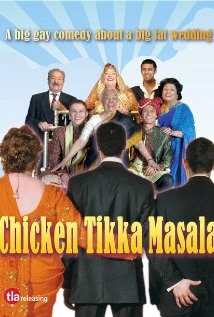
I finally gave in to Netflix's "suggested" list of films. Not sure why Netflix suggested Chicken Tikka Masala  - I'm guessing it's some combination of my ratings of Shah Rukh Khan, Hrithik Roshan, Bend It Like Beckham, and half a dozen other indy films about gay or lesbian second generation immigrants. But I really liked both the premise and the specifics of the (highly improbable) plot: a guy's very traditional Hindu family misunderstand a phone conversation and think he agrees to a hastily-arranged marriage to a good Indian girl, not realizing that his "best friend" is really his lover.

The delivery was a little uneven: I suspect the film was very low-budget, and the camera quality kind of shows it. Some of the dialogue is stilted, and some of the acting not quite convincing. Quite a few of the characters are sloppily stereotypical: the fat English boozehound, the Jamaican alcoholic, the eagerly horny Indian guest.

Overall, I liked it. It was made in the early-ish 2000s, during the "multi-culti" independent film craze, which produced a lot of films with similar predictable storylines about second generation Americans or Brits navigating the nuances of identity (immigrant, nationality, gayness, changing gender roles). Though I watched a lot of these movies in my own identity-navigating phases, I honestly can't get tired of them, even if have to be in the right mood to watch one. In general, I think they should be celebrated for bringing to light the struggles of a lot of different and overlapping communities to participate in civic life.

And then, coincidentally, of the four episodes of MI-5 (Series 8) I watched recently, one of them had a character and plot that semi-justified my deep love of this highly anti-civil liberties, pro-War on Terrorism show. A 17-year-old Indian Muslim recruited to infiltrate a Hindu nationalist group saves the day (and survives, which is rare on this show); but at the end of the episode had some of the more insightful and heartbreaking surface-level lines of the entire 10 seasons: "You're always busting in on Asians in the middle of the night and dragging them away... All I wanted was a game of football. [But] you played me, just like [opposing spy] played [opposing agent]."

Sunday, January 19, 2014

And then there were none

I waited a year for Rhys Bowen's latest mystery in her Royal Spyness series, and it didn't disappoint. In previous books with delightful punny titles, our impoverished heroine -- the 35th in line to the throne -- has been sent to a dreary Scottish castle, a vampire-infested Romanian castle, and the French Riviera with Coco Chanel. This time, she is dispatched by Her Majesty to a country estate in Kent to teach an Australian sheep herder how to run the dukedom he has unwittingly inherited.

Campy stereotypes and a murder mystery ensue -- perfect for gray Northwest evenings after playing soccer in the drizzle on sodden pitches with no female subs!

Unfortunately, I'll have to wait for Bowen to write the next Royal Spyness installment, but in the meantime I'm excited that she's written two more books in her Molly Murphy series. So I have those to look forward to finding and reading while also waiting on pins and needles for Alan Bradley's next Flavia De Luce book to come out, like, any day now...

Speaking of campy murder mysteries, I thought Clue was made in the late 1990s, and was more than a little confused when Tim Curry looked even younger than he did in the worst made-for-TV movie about the Titanic ever (which I watched as a teenager out of sheer dedication to Titanic lore).

Also good fun for a dark and stormy January night. (Outside my window, not on my screen...)

Saturday, January 11, 2014

Gray hairs, grey cells

Jasper Fforde's Thursday Next series is one of my favorites of all time, for its sheer and utter mind-blowing brilliance. With the first book, The Eyre Affair, Fforde completely rewrote the rules of fiction and deserves some sort of Nobel Prize.  And then he did it again and again and again and again and again.

And now, in The Woman Who Died A Lot, our book-jumping, time-traveling heroine Thursday is now in her early 50s. She's limping around from the last assassination attempt and still has to dodge clones of herself that her lifelong nemesis, an evil corporation, keeps creating to gather secrets from those close to her. Meanwhile, in the future the time police have been disbanded in the present, so her son no longer has a bright career to which he can aspire; and her genius daughter is trying to build a device that will save Swindon from a smiting by the Almighty, who is angered that Thursday's clergyman brother has resorted to collective bargaining with Him over the answer to the ultimate question of existence.

Like every other Thursday Next book, I couldn't put it down. And like every other Thursday Next book, no pithy summary can do it justice nor convey exactly how fantastically nerdy and nuanced the plot is. It's so heartening to know that an eighth book is in the works!

Though Thursday, who was the same age as me when I started reading the series (28), is now in her early 50s in the series, I feel some sort of affinity to what she and her peers might say to Jasper Fforde's two newer books for young adults: "I'm too old for this."

  
Fforde's Kazam series takes place in a world where magic is a bit like electricity: highly regulated and also possibly used for evil. Magicians have varying types of magical abilities; dragons and other mystical creatures co-exist with humans in an alternate-reality Ununited Kingdom, where an orphaned teenager named Jennifer holds together a magicians' nursing home of sorts.

The books are a quick read, and the magical made-up world is kindergarten stuff after eight books of having to wrap one's mind around the complexities of Thursday Next twists and turns. And while I appreciated the imagination and creativity behind the storylines, the characters and plots themselves just didn't overwhelm me.

I can recognize when I am about 20 years older than the intended audience and just can't relate to a series.

Hobbling off the lawn now...


Thursday, January 02, 2014

The New Colossus


Not that I'm obsessed or anything (*cough*), but Henry Cavill is even better as eye candy in Immortals than he is in Man of Steel. I think it's the chlamys and the chiton.

The movie itself is utter crap, though: it's sepia-tinted, induces visual vertigo, and is only loosely based on the Theseus legend of Greek mythology. I haven't taken classics since high school, but I do remember that the Minotaur wasn't actually part of an invading barbarian horde trying to unleash imprisoned Titans in order to capture a bow with magical powers and defeat the Hellenes. But Netflix was going to take it off of Instant Streaming in a few days, and I had insomnia... so why not watch it?

A much, much better way to pass time while re-living Grandpa's old lectures about the ancients is to read Ruth Downie's murder mystery series about a doctor in Roman Britain (for a great and hilarious murder series that takes place in ancient Athens, see Gary Corby's books). It's not as dark as the Nox noir series, for starters ... if detective stories set in the tinderbox border worlds after the Roman massacres of the Druids can be "not dark", that is.

The series features as its protagonist the highly intelligent but sometimes bumbling medical officer for a Roman Legion based in in Britain. The books are at times funny and heartbreaking, but always interesting ... even if the Medicus' relationship with his slave-turned-mistress-turned-wife clashes uncomfortably with modern conceptions of gendered power dynamics.

I finished the Medicus series right when Congress failed (again) to pass comprehensive immigration reform, and I couldn't help but think about how human migration patterns and melting-pot cultures ebb and flow with the empires of their times. Throughout the books, the doctor struggles with his love/hate relationship with Britain herself, native Britons who see him (correctly) as part of the occupying forces, his homeland and estranged family in Gaul, and the meaning of and duties inherent in Roman citizenship.

While reading the series, I couldn't get Kipling's "The Roman Centurion's Song" out of my head:
I've served in Britain forty years. What should I do in Rome?
Tempest-tossed, indeed.

Wednesday, January 01, 2014

Everything beautiful in its time

I love the holiday season, from Thanksgiving through New Year. I love Thanksgiving because it's the closest thing to a modern community-oriented feast. I love Christmas because of all unabashed glee and giving. And I love New Year's Eve and New Year's Day for the chance at change and renewal, and for reflecting on and celebrating the past.... which is why, every January, I like to figure out what I did for the first time in the past year.

Sometimes, after remembering, I'm surprised by things I haven't done until this late in my life; other times, I'm excited that I've been lucky enough to be able to keep trying and doing new things.
And further still at an unearthly height,
A luminary clock against the sky

Proclaimed the time was neither wrong nor right...*
"Firsts" from 2013:
  • Visited Mexico! - My first trip to Mexico was for two college friends' anniversary celebrations. There were many other "firsts" that occurred on the trip (some of them rather scandalous), but most shall remain tactfully and discreetly unwritten.
    • Visited Mayan ruins.  I spent almost an entire day at Tulum. The coolest part was being able to swim on a gorgeous beach right next to the ruins.
    • Went scuba diving... or rather, attempting to scuba dive.  The longest section I spent underwater was the practice session in the chlorine pool. Once out at sea, 2 of the 4 of us beginners on the boat had anxiety attacks once we plunged into the water and swam over to the buoy, so our whole group called the boat back and called it a day. We still have one more dive with the company in saecula saeculorum, so maybe one day I'll go back and complete an actual dive.
    • Stayed at an all-inclusive resort. The food was meh, but it was probably the safest way to do the trip. I generally love wandering around finding local food spots, but the language barrier would have been difficult, and I likely would have been overcharged for many services if they hadn't already been included (let's face it, I'm not great at haggling). I definitely took advantage of the nonstop piña coladas. But the loud, obnoxious Americans were embarrassing; even though Americans were the minority of the resort's clientele, they were definitely the loudest and most boorish and there were times when I was ashamed to share a nationality with some of them. I always hate realizing that there's actually a lot of truth to the Ugly American caricature.
  • Saw a rattlesnake in the wild - About two feet away from my foot. Paranoia-inducing. On the plus side, I now know what a rattlesnake's "rattle" sounds like; and whereas I had no clue what to do if anyone on a hike is bitten by one, I do now!
  • Visited St. Louis - My college roommate's wedding brought me to the Gateway City in May. MY GOD, THE HUMIDITY! The St. Louis Arch was pretty cool, though, as was:
    • Seeing huge, gigantic fingerlings of lightning fly across an entire city and beyond. My last night in the city, there was a huge thunderstorm. My hotel had a rooftop deck with a view of downtown; so I ordered a glass of wine and watched the lightning show because we don't get lightning like that in the Northwest. 
    • Attending a Hindu wedding ceremony. It was the shortened, mere 3-hour version, and the wedding program explained what the Sanskrit rituals were for the benefit of guests (like me) who didn't know. I felt very dressed down and tame in my bright yellow, flowery dress, compared to the gorgeous and colorful saris of my old roomie and her family.
  • Finally bought an iPhone - AND I LOVE IT. I'd clearly been living in the Dark Ages by stubbornly clinging to my BlackBerry!
  • Saw mountain goats in the wild - They were a little scrawny because it was early in the season, but they were still only a few yards away at Lake Colchuck.
  • Hiked to 12,000 - My new record! My first summit attempt for Mt. Rainier, and I made it past the base camp I'd hiked to the year before. 
    • Camped on a glacier! - And I loved loved loved every minute of it
    • Wore crampons - They're really cool.
    • Wore mountaineering boots - They're not very cool. Bulky and hard to get used to.
    • (TMI WARNING) Used a Blue Bag - It was also not very cool, and very undignified. Google it.
    • (TMI WARNING) Used a Go-Girl - Also rather undignified (but less so than the Blue Bags). I even practiced in the shower before leaving for the trip. It was ... interesting, and a little liberating.
  • Summited an active volcano (the most active and dangerous in the continental U.S.) - And I loved loved loved every minute of it. My favorite part was standing at the top, peering into the crater and seeing the steam vents, and hearing the mountain creaking.
To life! Looking forward to the challenges and opportunities of 2014.


And because I wrote but forgot to publish this post last New Year....

"Firsts" from 2012:
  • Visited Las Vegas! - There's a lot of ridiculousness in Sin City, but my highlights were: the Bellagio Fountains, the Chihuly exhibit at the Bellagio, lobster buffets, dinner at a Michelin-rated restaurant with my oldest friend, and an inside mall with the ceiling painted to be like the sky.
    • Went ziplining - Across Vegas' old downtown. Fun! 
    • Gambled - I have no idea how I worked the slot machine, but I lost $5 trying to figure it out. My first time gambling, period. And I don't even know how I did it.
  • Went to the Skagit Tulip Festival - Despite growing up in the Pacific Northwest, I'd never been before. Went with La Madre.
  • Left one job for another - I've left jobs for grad school and because funding ran out, but never before for another job. It was just time to move on.
  • Bought a car - A (used) 2012 Ford Focus. I named her Adelaide, "Addie" for short. Second only to my graduate degree, she is the most expensive thing I have purchased entirely on my own. (Still paying off both car and grad school loans, though, so I don't know what that says about status symbols...)
  • Visited Detroit! - Despite visiting Ann Arbor twice a year to see Mi Hermana y Los Sobrinos, I'd never been in Detroit Proper before. It was just as bleak as I imagined it would be, but exploring a park with the nieces and neffy was fun. And going to restaurants and bars with colleagues for a conference also showed a side of the city that I never would have found on my own.
  • Hiked to a base camp - On kind of a lark, three of us hiked up Muir Snowfield to Camp Muir on Mt. Rainier.
  • Acquired a nephew I haven't seen yet - Born in New Zealand. I get to watch him grow up on Skype until I can accrue enough money and vacation time to visit for a minimum of 3 weeks.
  • Chased ballots - This involves going door-to-door to voters whose ballots have been invalidated due to sloppy signatures or other reason, and asking them to fill out the form the county sent to make sure their ballots are counted. Turns out, I like it better than regular canvassing!
Bring on another new year!


* from Robert Frost's "Acquainted With the Night" - one of my favorite poems

Friday, December 27, 2013

From Bosworth to Boulogne

For a history project my senior year in high school, I wrote a very passionate defense of Richard III's innocence in the deaths of the Princes in the Tower. (Not that I was a huge fan of the entire Plantagenet line, but even back then I liked defending often-unpopular or obscure points of view just for the hell of it.) I had read Josephine Tey's The Daughter of Time back in middle school, and I think it made an impression on my proto-emo soul.

So when a friend reminded me of Josephine Tey's books, I read the three preceding books in her Inspector Alan Grant series... and then I re-read The Daughter of Time again. It's been a while since I've read mysteries without a female protagonist, but Tey's Inspector Grant series is an enjoyable police procedural mystery set, peppered with descriptive piquancies - perfect for gray Northwest evenings!

In the first three books, Inspector Grant is in the field, running around Britain solving murder mysteries and gaining insights into human behavior from his theatre and society friends. But in the last, while recuperating in hospital from an injury sustained while chasing crooks, he "solves" the mystery of whether or not Richard III murdered the Princes in the Tower. (He comes to the conclusion that he did not, and that the hunchbacked, throne-usurping Uncle Richard story was propaganda put out by Henry VII and enshrined by pro-Tudor factions for decades onward. Even Shakespeare was not blameless, writing as he did under a Tudor monarch.)

Of course, reading the series reminded me that earlier in the year, DNA tests proved that a skeleton found under a car park in Leicester was indeed Richard III's.

Meanwhile, an ocean and several hundred years (and light years) away, I am also fascinated by the superhero film genre as an ever-evolving expression of national identity. So when Man of Steel came out earlier this year, I went to see it. (It's a pretty crappy movie. Amy Adams is wonderful as always, and I did like the extended back story of Jor-El and Krypton. But there were way too many gratuitous explosions and overly long scenes of the casual destruction of planets and buildings. The tornado scene was particularly unfortunate, given so much devastation this year in Oklahoma. How can a superhero save an audience that is too desensitized to violence?)

Looking at oh-so-pretty Henry Cavill was basically the only thing that kept me in my seat for over two hours.

Soooo, after election season settled down I finally got around to watching The Tudors.

I had long been personally boycotting the series due to the anti-Plantagenet conspiracy that particular dynasty wreaked on its predecessors (see above and what reading The Daughter of Time did to an impressionable 12-year-old).

Turns out, the series is brilliant. It takes a lot of liberties with the timeline (and some historical figures age quickly, while others don't age at all in what should be a 20-year span).  But aside from some digressions from the history books and chronology, I think it gets the general spirit right.

Trying to make a rather fit Jonathan Rhys-Meyers look like a rotund Henry VIII, though, was amusing, as was Henry telling Thomas More "You're not a saint!" (Ha ha... )

The most fascinating aspect of the series, though, was how it portrayed the tumultuous break with the Church in Rome and the rocky, somewhat sketchy beginnings of the Church of England. I really appreciated how the series included the doctrinal implications of the schism as well as the cultural and political ones. That gray, confusing area where England was neither fully Catholic nor very Protestant is generally glossed over, but is so fascinating... especially from an organizer's perspective! (What do we do with all these abbeys? What do we believe about the transubstantiation, again? How do we tell the illiterate masses what just happened? What is happening? What's the definition of heresy this week?)

The series is most known not for its insightful theological statements, of course, but for its raunchy soft-core porn-esque sex scenes.

From the brilliant and nerdy comic Hark! A Vagrant


Maybe I should just continue on this chronological journey, and move on to the Stuarts! Mi Hermana did tell me over Thanksgiving that she's addicted to Game of Thrones, and that after recognizing threads from family rants while watching the Red Wedding episode, discovered it was indeed based in part on the Glencoe Massacre...

Wednesday, November 20, 2013

Under thine own life's key

Back when Mis Hermanas and I were only allowed to watch pre-1970s movies, we ended up watching a lot of WWII films ... and a lot of those were POW movies. (The Great Escape remains to this day the one film I have seen the most in my life, due to watching it every other weekend one summer in middle school.)

There are very few women in war movies. But when we'd play-act or write (we would have "travelling stories" sessions where we'd each write for 10 minutes, then trade and keep finishing each other's stories), we'd insert ourselves or kick-ass girls into the storyline as if their war experience could be equal to those of men.  Once, I even turned in a story in high school about a female pilot shot down over Germany who escapes from a POW camp; my English teacher hailed it as a good idea for story contest and history research project.

So stories about female pilots shot down over occupied Europe in WWII were already familiar terrain for me.

But I read Code Name Verity on the recommendation of a friend, thinking it would be a Spy Kids kind of storyline... or even one along the lines of the Maggie Hope series.

Instead, Code Name Verity had me sobbing for the last few chapters. It's the story of two best friends, female civilian pilots who ferry planes for airborne servicemen to use. When shot down in occupied France, one is captured and tortured for information, and one is not. The story of their friendship and fates is told captivatingly through diaries and journal entries.

The sequel, Rose Under Fire, was actually heavier in content than its predecessor (I didn't think it could be, but it was). Rose is also the story of a female pilot, shot down over Germany towards the end of the war. She is thrown into the infamous Ravensbrück concentration camp and shares a bunker with a (real life) group of Polish prisoners who have been the subject of Nazi medical experiments. It evoked memories of specific passages from both Night and Survival in Auschwitz that, even years later, I can never forget.

Wein's writing style reflects the fact that the books are written for young adults, and the characters are all young women in their late teens who are still navigating their place in a male-dominated world. The characters struggle to find -- and maintain --  their own voices amidst chaos and utter brutality: the respective themes of the books are "I have told the truth" and "Tell the world".

The books are heartbreaking and heart-wrenching, but they speak to the simple heroism of survival and the enduring power of friendship. I'm definitely adding these books to my collection of WWII fiction for young adults.


Sunday, November 10, 2013

Hard and heavy tidings

In the wee hours of late summer, both pre- and post-primary election, the long hours of work frequently demand cheesy soap opera-esque dramas to soothe the unending campaign routine.

The Maggie Hope series provided exactly that relief.

The main character is half-British, half-American trying to find her roots in London when war breaks out. She happens to be a brilliant mathematician who speaks German. She happens to be recruited to join the secret service in the war effort. And of course, she discovers that her supposedly long-dead father is actually a brilliant scientist working with Alan Turing on super-secret code stuff, that her also supposedly long-dead mother is in fact a famous German spy, that the man she loves in Book One and supposedly dies in Book Two is alive after all in Book Three (to create an awkward love triangle with Man 2, who consoled her after the "death" of Man 1).  And that she has a nurse half-sister in Berlin who secretly tries to save mentally ill and other Nazi-deemed "undesirable" children.

In between all of these scandalous revelations, Miss Hope (right?) saves London from an Irish insurgent, saves Princess Elizabeth from a Nazi kidnapping plot, and gathers valuable information for the Allies from behind enemy lines in the heart of the Fatherland. Naturally, she goes rogue several times (but her ends always justify the means); and she always has a showdown with male superiors who want to limit her role to more mundane and secretarial duties. There are also inspirational Churchill quotes interspersed, Mrs Miniver-like scenes from around Britain, and gay and Jewish best friends to remind us of what the war is really about.

The books are a fairly quick read, and the plots are almost comic-book unbelievable. But they're still enjoyable!


Saturday, November 09, 2013

Ah, Teneriffe!

Because the WA State primary and then the general elections swooped in almost immediately after the Mt Rainier adventure, I've barely had time to pause and reflect.

Rainier was AMAZING. I had a small anxiety attack at midnight at 12,000' when we started the final trek to the top, and had to turn back. But 12,000' is now the highest height to which I have ever hiked (beating my previous record of 10,000' at base camp the year before).

And I loved every minute on the Mountain.

I discovered I love hanging out on glaciers. I discovered exactly how in-shape I was (despite ongoing body-image issues that women in our society are told to have), what my personal hiking style is, and that there is actually cell phone service at 11,000' on the southeast glacier. Also, that there are bees that high up, despite there being no vegetation.

I'll be back to finish the summit in the next few years!

So then a few months after the Rainier summit attempt, I summited Mount St Helens - though it's now considerably lower in elevation (8,365' to Rainier's 14,410'), the journey to the top was completely different. (No glacial travel, though there is one glacier on the mountain.)

For starters, the trail past the timber line is straight up ash and huge pumice boulders. It's extremely humbling to realize that, once upon a time when I was a baby in Wenatchee cranky because I couldn't go outside to play in the falling ash, the very boulders I was scrambling over were being formed deep within the earth's crust and ejected nine miles into the atmosphere above St Helens before landing on the slopes for future climbers to maneuver around.

The view at the top is similarly humbling: the mile-wide crater, with the growing lava dome in the middle, dozens of vents spewing steam, and the entire north slope of the mountain completely missing (and the forest still pretty scorched and desolate).

The main steam vent was captivating - I took tons of footage of the plumes spiraling upward.


And when we finally got fellow climbers at the top to hush, the most humbling experience of all...

You can hear the mountain rumbling.

Friday, July 05, 2013

The agonized groans of mangled men

Because I signed up to summit Mt Rainier this summer, La Otra Hermana suggested I read Bear Grylls' autobiography. Though I am permanently scarred from watching Man vs. Wild footage of him squeezing elephant dung in order to drink water while "stranded" in the savannah, I decided to read it because La OH never recommends books (the last one was The Maker's Diet).

Of course, La Otra Hermana did have ulterior motives: it turns out, Grylls is super-Christian. The first half of Mud, Sweat, and Tears is basically him detailing how pure grit and God got him through the grueling tryouts for the elite British Special Forces. The second half is how pure grit and God got him through the grueling climb up Mount Everest, when he became the youngest Brit (at the time) to summit.

It's not the most well-written book... and that's a kind understatement. There's also a definite "muscular Christianity" and vaguely colonial attitude underlying the stories he tells about his adventures, which gets a little uncomfortable at times.

I was surprised, though, that Grylls is actually from a pretty well-off, privileged family. There was one line that had me laughing out loud: when Grylls shows up for Special Forces training with a chum from Eton, they're heckled by trainers with shouts of "Where are the lads who speak like Prince Charles?"

What strangely does motivate me to train for Rainier?  A mystery series set in ancient Athens. Maybe it's the Spartans as intimidating secondary characters, or the reminder of how marathons started, or the setting of the third book at the Olympics. But the series is thoroughly enjoyable, as well as hilarious.

Nicolaos is the fictitious older brother of the 12-year-old Socrates. He is commissioned by Pericles to solve a politically charged murder in the early days of Athenian democracy. Then he's dispatched to Ephesus, deep in the heart of the Persian-ruled part of ancient Greece, to see what an ostracized Themistocles is up to. Upon returning to Athens in time for the Olympics, he has to solve yet another murder in order to avert a war with Sparta.

I haven't taken classics since ninth grade, so I had to brush up on my ancient Greek history a bit after the first few chapters of The Pericles Commission. Then I breezed through the next two books because they're so wonderfully witty! Can't wait for the fourth book to come out sometime next year.

In the meantime, I have two weeks left of stairs, weighted backpacks, and pain. Lots of pain.


Sunday, May 05, 2013

The devil you know

Reading Michael Robotham is like watching a psychological thriller onscreen: it's horrifying, kind of predictable, and yet gruesomely addictive in a Seven, noir-esque kind of way.

I like how his books alternatingly follow the same cast of characters (a police detective, a policewoman, a psychologist).

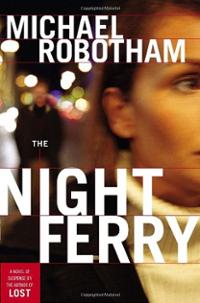
Night Ferry takes over where Lost leaves off -- and this time the narrator is the injured policewoman who heads to Holland's red light district to figure out who is smuggling pregnant immigrant girls to England to harvest their babies for adoption. In Shatter, Joe the psychologist is back to solve a series of grisly suicides. They all go rogue to solve horrific, extremely disturbing, and violent crimes.  But their personal lives suffer, making it harder and harder to look away from the disturbing train wreck and put the book down.

You know what's also disturbing?  Hearing a strange "rattle" sound and seeing this two feet away from your hiking boot.

Let's just say, I will be reading more Michael Robotham. But I probably won't go hiking in the eastern Cascades for a while.

Monday, March 11, 2013

I have no gun, but I can spit

Because the first book in the Flavia de Luce series completely blew my mind, of COURSE I ran out and read the rest of the series.

With each book, the delightfully devious pre-teen heroine reveals something new about herself or her family's past. She was expelled from the Girl Guides. Like her mother, she's a genius. She still wears pigtails. She tries so, so hard to be an evil scientist but in reality is just a pre-adolescent who wants to hug hurting people all around her. She's morbidly obsessed with murder and death, but still believes in Father Christmas and concocts a brilliant plan to trap him in a chimney.

The literary nerd in me also loves Alan Bradley's series because each book includes so many references to English literature -- including two of my own favorites from my adolescence, "The Lady of Shallott" (Book 4) and "The Highwayman" (Book 5). The literary references are woven into the general narrative, so readers must be familiar with standard semi-famous lines from poems.

While the second and third books aren't as strong as the first, I think the fourth and fifths ones are. And the cliffhanger at the end of Speaking From Among the Bones has me eagerly awaiting Book 6's release early next year...